Heritage & monuments
The Great Sphinx
Visiting the Great Sphinx
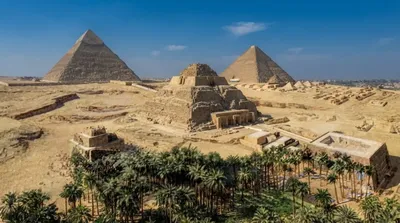
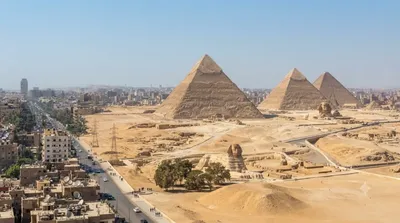
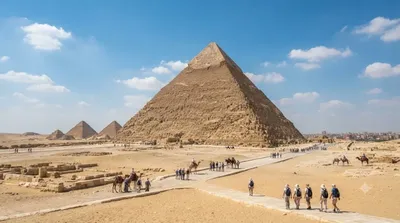
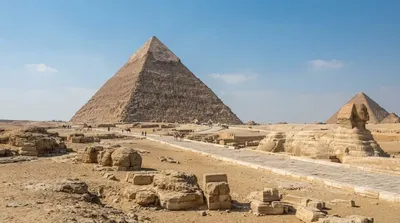
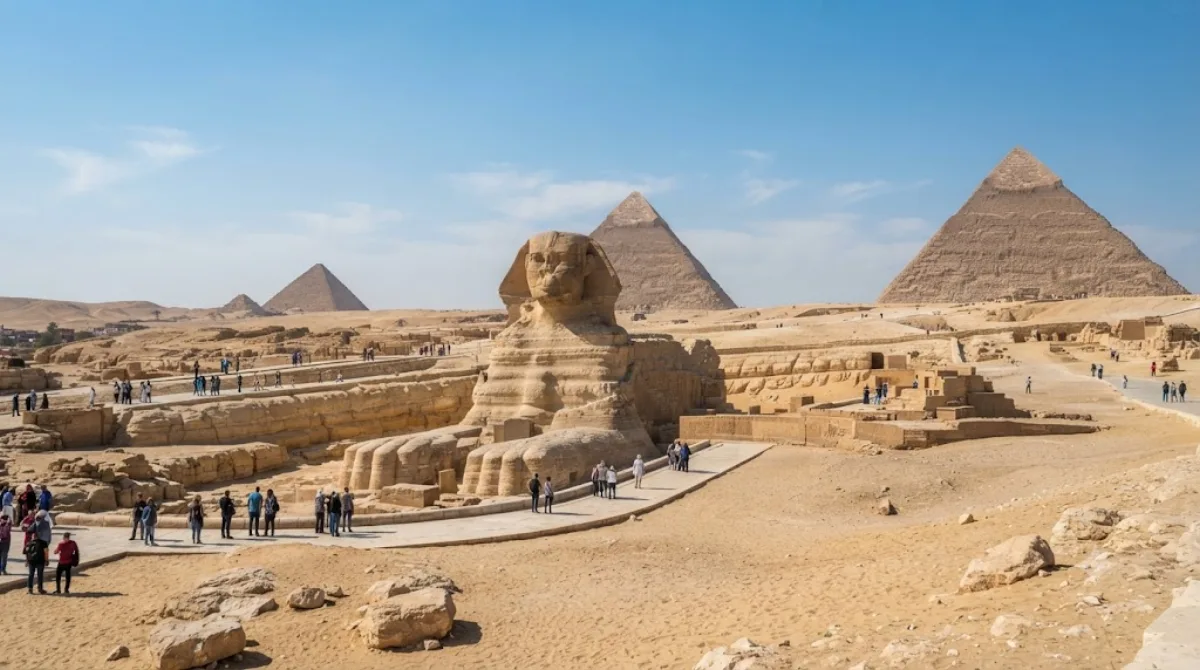
The Great Sphinx is a limestone statue carved with a lion's body and a human head, standing on the Giza Plateau facing east toward the Nile. It is Egypt's oldest known large-scale stone statue and part of the Giza pyramid complex, listed as a UNESCO World Heritage Site. Most visitors come to see it alongside the pyramids as part of a single plateau visit rather than as a standalone stop.
Getting there
From central Cairo, the plateau is roughly 30-45 minutes by car or taxi, depending on traffic, which can be heavy at peak times. Ride-hailing apps are widely used and generally straightforward. If arriving from Cairo International Airport (CAI), allow closer to an hour given the distance and traffic through the city.
How much time to allow
Seeing the Sphinx itself takes about 20-30 minutes, mainly from the viewing terraces near its base. Most travellers combine it with the wider plateau, in which case a half day is a more realistic budget for the whole visit.
When to go
Go early in the morning to avoid both the heat and the largest crowds, which build up quickly as tour groups arrive later in the day. The site is outdoors with little shade, so midday visits in the warmer months can be uncomfortable. Weekends and Egyptian public holidays tend to be busier with domestic visitors.
What to combine it with
- Pyramid of Khentkaus I (0.3km) - close enough to see on the same walk across the plateau.
- Giza Plateau (0.5km) - the broader site encompassing the Sphinx and pyramids together.
- Great Pyramid of Giza (0.5km) - the largest of the three main pyramids, usually the main draw of the visit.
- Pyramid of Khafre (0.7km) - the pyramid the Sphinx is traditionally associated with, worth pairing on the same trip.
Updated September 8, 2026 · Edited by the World by City editors
 GetYourGuide
 Klook
Klook
 Tiqets
 KKday
KKday
 WeGoTrip
 Booking.com
 Hotels.com