
Gyumri · Best time to visit
When Is the Best Time to Visit Gyumri, Armenia?
August 29, 2026 · last updated · about 3 min read
Seasonal Breakdown: Weather and Conditions
Sitting on the Shirak Plain at over 1,500 meters altitude, Gyumri has an extreme continental climate with distinct seasons, shifting daylight, and noticeable crowd patterns.
Summer (June to August)
Warm and dry with extended daylight. The high elevation creates strong midday sun, but evenings cool off noticeably. Terraces around Vardanants Square stay active until late.
Autumn (September to October)
The most comfortable window for travel. September has warm, clear days, while October turns crisp. Low rainfall ensures reliable walking conditions through the historic Kumayri district.
Winter and Early Spring (November to April)
Bitterly cold with frequent sub-zero spells and snow. Cobblestones turn icy, days are short, and outdoor sightseeing requires serious effort. Early spring remains slushy through April.
When to Visit Gyumri
- Best overall (September to early October): Mild weather and clear skies make walking effortless.
- For lively evenings (June to August): Long days and open cafe culture, though midday heat requires shade.
- Months to avoid for casual trips (December to February): Deep freezes and icy walkways impede walking tours.
Logistics, Events, and Packing
Gyumri City Day in early autumn draws regional visitors and limits central room availability. From Zvartnots International Airport (EVN), travelers make the 120-kilometer journey north from Yerevan. In snowy winter months, passenger rail from Yerevan Central Station is far more reliable than the highway.
Pack UV protection and an evening layer for summer, as temperatures drop fast after sunset. For late autumn and winter, pack windproof down coats, thermal base layers, and insulated boots with solid traction for frozen stone streets.
Pick your dates — we'll search Gyumri hotels for you
Choose dates and guests, and the buttons below will open search results with your criteria. Prices differ between sites, so compare before you book.
 View on Booking.com
 View on Hotels.com
Things to see in Gyumri
See all →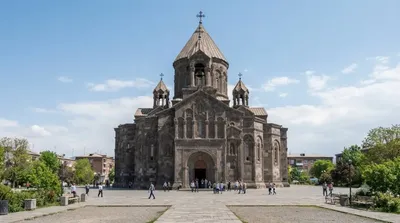
Temples & religious sites
Church of the Holy Saviour
A 19th-century church located south of Vartanants Square in central Gyumri, Armenia. It was built between 1858 and 1872 and consecrated in 1873.

Castles & palaces
Sev Berd
A former Russian Imperial fortress in Gyumri, built after the Russo-Turkish War. It now stands abandoned, letting visitors explore its ruins and sense the history.
Temples & religious sites
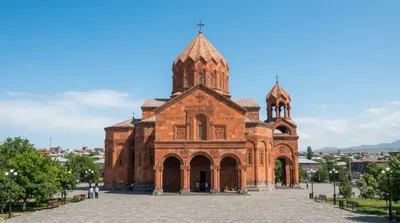
Cathedral of the Holy Cross
This Armenian Catholic cathedral stands on Victory Avenue in Gyumri, and pairs well with a visit to the National Architecture Museum right next door. Construction began in late 2010 and finished in 2015, giving it a fairly new, neat appearance.

Temples & religious sites
Cathedral of the Holy Mother of God
This 19th-century cathedral stands north of Vardanants Square in Gyumri. It serves as the seat of the Shirak Diocese of the Armenian Apostolic Church and was built between 1873 and 1884.
More Gyumri guides
Best value
Where to stay in Gyumri for the best value and transit access
5-star & luxury
Where to stay in Gyumri for luxury and premium boutique accommodation
Pool villas & resorts
Where to Stay in Gyumri for Pool Villas and Resort Stays
Family travel
Where to stay in Gyumri for a family trip
Couples & honeymoon
Where to stay in Gyumri for a couple's getaway
Central & near stations
Where to Stay in Gyumri for Easy Transit and City Center Access
First-time guide
How to Plan Your First Trip to Gyumri, Armenia
Getting around
How to Get Around Gyumri and Travel from Zvartnots Airport
Best time to visit guides for other destinations
Guantánamo
When is the best time to visit Guantánamo, Cuba?
Cetinje
The Best Time to Visit Cetinje: Weather, Crowds, and Season Guide
North Nicosia
When to Visit North Nicosia: Weather, Seasons, and Practical Advice
Banja Luka
The Best Time to Visit Banja Luka for Good Weather and Outdoor Activities