World by City

Temples & religious sites

Nanzen-ji Temple
Nanzen-ji Temple

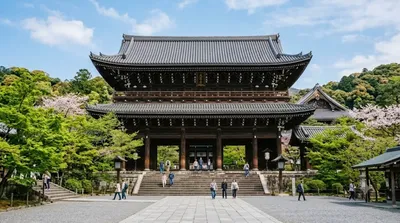
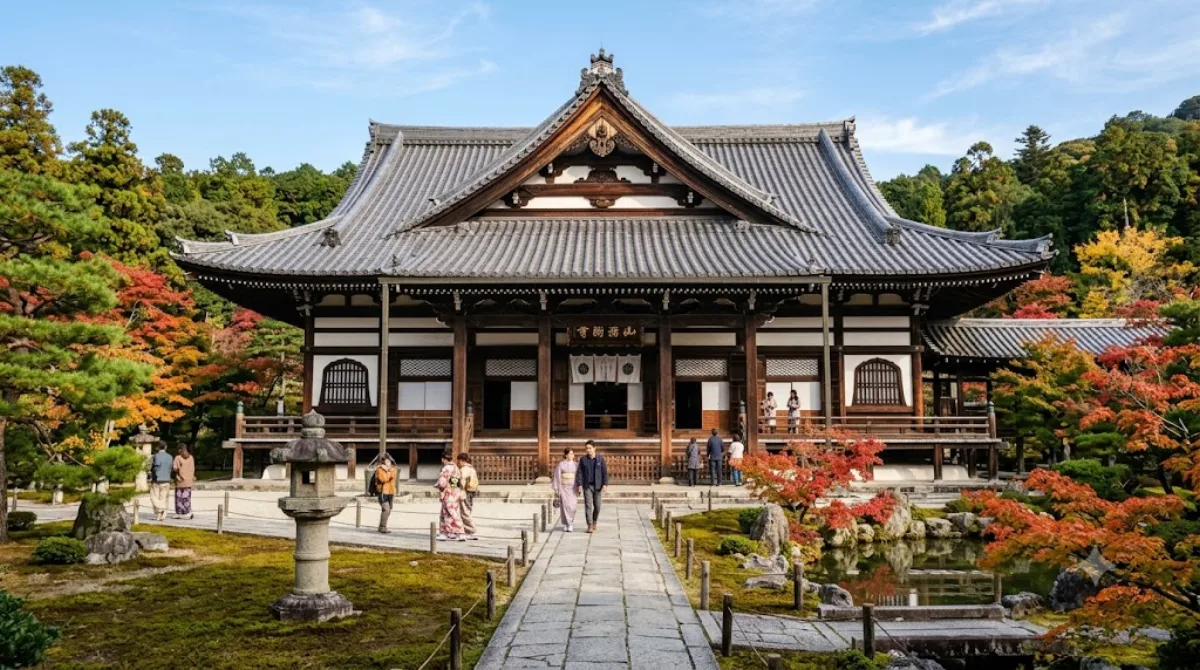
Nanzen-ji , or Zuiryusan Nanzen-ji, formerly Zenrin-ji , is a Zen Buddhist temple in Kyoto, Japan. Emperor Kameyama established it in 1291 on the site of his previous detached palace. It is also the headquarters of the Nanzen-ji branch of Rinzai Zen. The precincts of Nanzen-ji are a nationally designated Historic Site and the Hōjō gardens a Place of Scenic Beauty. The temple was destroyed in a fire in 1895 and rebuilt in 1909.

What it is

Nanzen-ji is a large Rinzai Zen temple complex founded in 1291 on the site of a former imperial retreat, and it now serves as the head temple of its own branch of Zen Buddhism. Most visitors come for the layered temple grounds rather than a single building: a massive wooden sanmon gate you can climb for views over the precinct, gravel-and-moss Zen gardens including the Hōjō garden, and, unusually for a temple, a redbrick Meiji-era aqueduct arching right through the grounds. Several sub-temples within the complex have their own gardens and are entered separately.

Getting there

Nanzen-ji sits at the base of the Higashiyama hills. From central Kyoto it's reachable by subway (Tozai Line to Keage Station, then a 10-minute walk) or by bus, with the walk from the station taking you past the old aqueduct. Allow around 20-30 minutes from downtown Kyoto.

How long to spend

Plan on 1 to 1.5 hours for the main grounds and sanmon gate; add 30-45 minutes more if you also visit one or two of the sub-temple gardens.

When to go

Early morning is quieter and more comfortable, especially in summer. Autumn foliage season (November) draws heavy crowds and can mean queues at the sanmon gate and popular sub-temples, so an early start matters most then. Being outdoors and partly uncovered, the grounds are also more pleasant outside the height of summer heat or heavy rain.

Combine with

  • The National Museum of Modern Art, Kyoto (1.1km) for an indoor break nearby.
  • Chion-in Temple (1.2km), another major temple within easy walking distance.
  • Heian Jingū (1.3km), a Shinto shrine with a very different architectural style for contrast.
  • Yasaka Shrine (1.6km) if extending the walk further into the Higashiyama area.

Sources: open data from Wikipedia and OpenStreetMap · Updated August 5, 2026 · Edited by the World by City editors

Tickets & tours

Admission prices and opening hours change often, so we don't list them here. Check what's on sale and at what price below — booking ahead can cut the queue at some places.

This place may not appear in the results — some sites are free to enter or sell tickets only at the gate.

Stays near Nanzen-ji Temple

Sorted by distance, walkable ones first. Distances are straight-line.

Map © OpenStreetMap contributors. Lines are straight connections, not actual routes.

Nanzen-ji Temple Nearby stays

Locations and names come from OpenStreetMap. Check prices and availability on the booking sites.

Good to visit alongside

National Museum of Modern Art, Kyoto

Museums & galleries

National Museum of Modern Art, Kyoto

The National Museum of Modern Art, Kyoto is an art museum in Kyoto, Japan.

1.1 km away

Chion-in Temple

Temples & religious sites

Chion-in Temple

Chion-in in Higashiyama-ku, Kyoto, Japan is the headquarters of the Jōdo-shū founded by Hōnen (1133–1212), who proclaimed that sentient beings are reborn in Amida Buddha's Western Paradise by reciting the nembutsu, Amida Buddha's name.

1.2 km away

Heian Jingū

Temples & religious sites

Heian Jingū

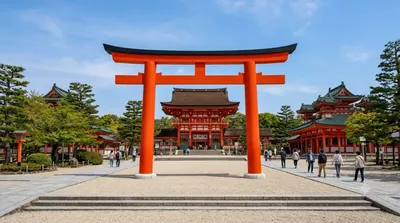
The Heian Shrine is a Shinto shrine located in Sakyō-ku, Kyoto, Japan. The Shrine is ranked as a Beppyō Jinja (別表神社) by the Association of Shinto Shrines. It is listed as an important cultural property of Japan.

1.3 km away

Yasaka Shrine

Temples & religious sites

Yasaka Shrine

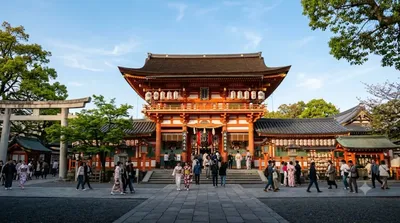
Yasaka Shrine , once called Gion Shrine , is a Shinto shrine in the Gion District of Kyoto, Japan. Situated at the east end of Shijō-dōri, the shrine includes several buildings, including gates, a main hall and a stage. The Yasaka shrine is dedicated to Susanoo in the tradition of the Gion faith as its chief kami, with his consort Kushinadahime on the east, and eight offspring deities on the west. The yahashira no mikogami include Yashimajinumi no kami, Itakeru no kami, Ōyatsuhime no kami, Tsumatsuhime no kami, Ōtoshi no kami, Ukanomitama no kami, Ōyatsuhiko no kami, and Suseribime no mikoto.

1.6 km away

Ginkaku-ji Temple

Temples & religious sites

Ginkaku-ji Temple

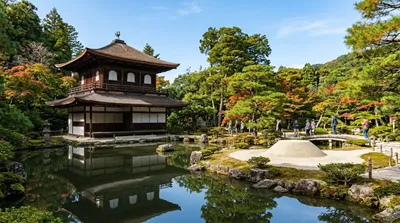
Ginkaku-ji , officially named Jishō-ji , is a Zen temple in the Sakyo ward of Kyoto, Japan. It is one of the constructions that represent the Higashiyama Culture of the Muromachi period.

1.8 km away

Gion

Shopping & districts

Gion

Gion (祇園) is a district of Higashiyama-ku, Kyoto, Japan, originating as an entertainment district in the Sengoku period, in front of Yasaka Shrine. The district was built to accommodate the needs of travellers and visitors to the shrine. It eventually evolved to become one of the most exclusive and well-known geisha districts in all of Japan. Gion is the Japanese translation of the Buddhist term Jetavana. Yasaka Shrine, located in this district is the center of the Gion faith.

1.9 km away