World by City

Temples & religious sites

Saihō-ji Temple
Saihō-ji Temple

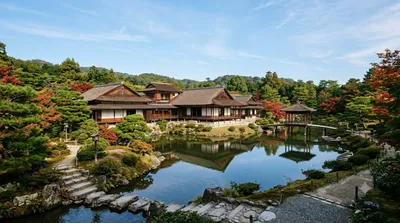
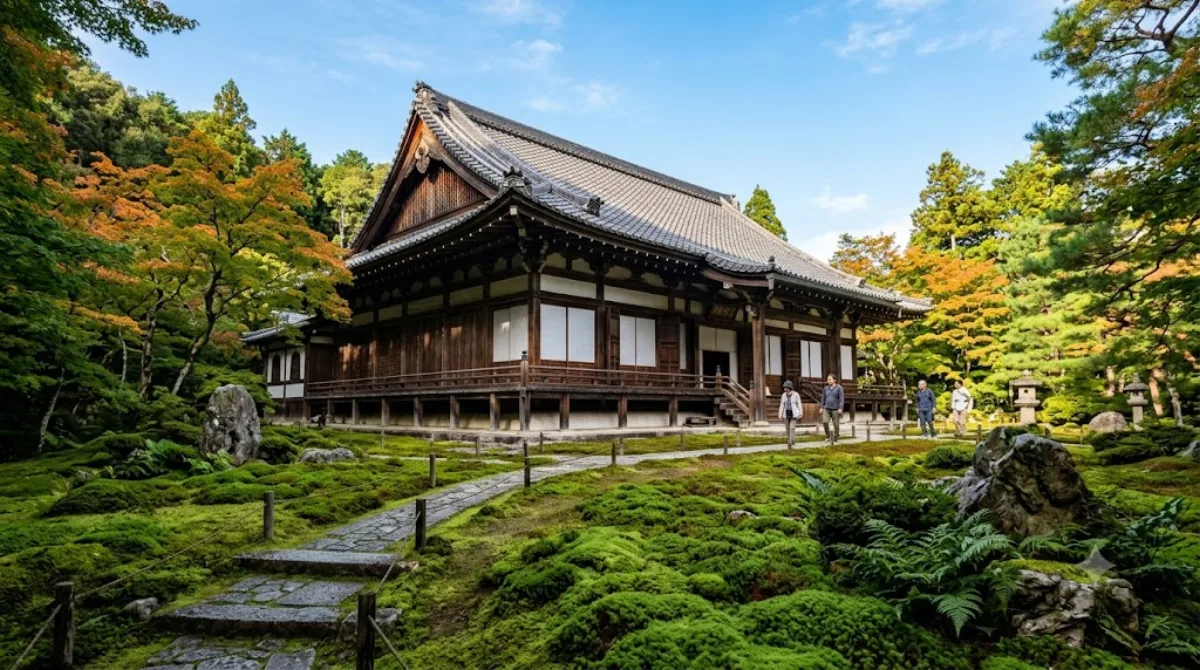
Saihō-ji (西芳寺) is a Buddhist temple located in Matsuo, Nishikyō-ku, Kyoto, Japan. It belongs to the Rinzai school of Japanese Zen, and honzon is a statue of Amida Nyorai. The temple, which is famed for its moss garden, is commonly referred to as "Koke-dera" (苔寺), meaning "moss temple", while the formal name is "Kōinzan Saihō-ji" (洪隠山西芳寺). In 1994, Saihō-ji was registered as a UNESCO World Heritage Site, as part of the "Historic Monuments of Ancient Kyoto". Over 120 types of moss are present in the two-tiered garden, resembling a beautiful green carpet with many subtle shades. The ga...

What it is

Saihō-ji is a Rinzai Zen temple in western Kyoto, best known by its nickname "Koke-dera" (moss temple). Its two-tiered garden holds more than 120 types of moss, forming a green groundcover under maples and pines rather than the raked gravel typical of other Kyoto Zen gardens. It's a UNESCO World Heritage site as part of the Historic Monuments of Ancient Kyoto. Visitors are asked to copy a sutra by hand before entering the garden, which sets a slower, quieter pace than a typical temple stop.

Getting there

From central Kyoto, it's roughly 30-40 minutes by bus or a combination of train and bus to the Matsuo/Nishikyō-ku area; a taxi from downtown takes about 20-25 minutes depending on traffic. It sits close to Katsura Imperial Villa and Arashiyama, so it's easy to fold into a west Kyoto itinerary.

How long to spend

Allow at least 1.5 to 2 hours, including the sutra-copying session before the garden walk itself.

When to go

Because visits require advance reservation and a written request, there's no walk-in crowding, but the temple limits daily visitor numbers, so plan well ahead rather than showing up spontaneously. Moss looks most vivid after rain or during the humid summer months.

What to combine it with

  • Arashiyama (2.5km) - bamboo grove and riverside area, easy to pair for a full day in western Kyoto.
  • Katsura Imperial Villa (2.5km) - Edo-period villa and garden, also requiring advance reservation.
  • Tenryū-ji Temple (2.8km) - another UNESCO-listed Zen temple with a pond garden, near the Arashiyama bamboo grove.

Sources: open data from Wikipedia and OpenStreetMap · Updated August 5, 2026 · Edited by the World by City editors

Tickets & tours

Admission prices and opening hours change often, so we don't list them here. Check what's on sale and at what price below — booking ahead can cut the queue at some places.

This place may not appear in the results — some sites are free to enter or sell tickets only at the gate.

Stays near Saihō-ji Temple

Sorted by distance, walkable ones first. Distances are straight-line.

Map © OpenStreetMap contributors. Lines are straight connections, not actual routes.

Saihō-ji Temple Nearby stays

Locations and names come from OpenStreetMap. Check prices and availability on the booking sites.

Itineraries including this place

Good to visit alongside

Katsura Imperial Villa

Castles & palaces

Katsura Imperial Villa

The Katsura Imperial Villa or Katsura Detached Palace is an Imperial residence with associated gardens and outbuildings in the western suburbs of Kyoto, Japan. Located on the western bank of the Katsura River in Katsura, Nishikyō-ku, the Villa is 8km distant from the main Kyoto Imperial Palace. The villa and gardens are nationally recognized as an Important Cultural Property of Japan.

2.5 km away

Arashiyama

Nature

Arashiyama

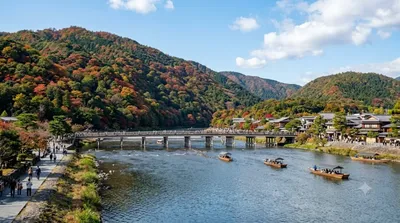
Arashiyama is a district on the western outskirts of Kyoto, Japan. It also refers to the mountain across the Ōi River, which forms a backdrop to the district. Arashiyama is a nationally designated historic site and place of scenic beauty.

2.5 km away

Tenryū-ji Temple

Temples & religious sites

Tenryū-ji Temple

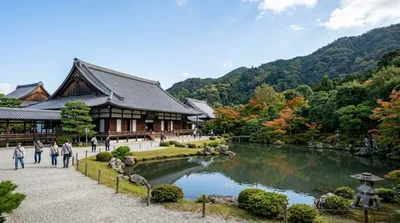
Tenryū-ji (天龍寺), formally known as Tenryū Shiseizen-ji (天龍資聖禅寺), is the head temple of the Tenryū-ji branch of the Rinzai sect of Zen Buddhism, located in Susukinobaba-chō, Ukyō Ward, Kyoto, Japan. The temple was founded by Ashikaga Takauji in 1339, primarily to venerate Gautama Buddha, and its first chief priest was Musō Soseki. Construction was completed in 1345. As a temple related to both the Ashikaga family and Emperor Go-Daigo, the temple is held in high esteem, and is ranked number one among Kyoto's so-called Five Mountains. In 1994, it was registered as a UNESCO World Heritage...

2.8 km away

Myōshin-ji Temple

Temples & religious sites

Myōshin-ji Temple

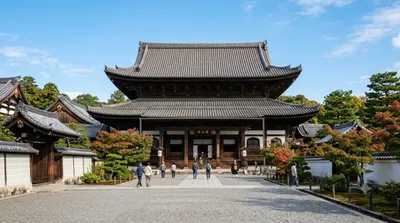
Myōshin-ji is a temple complex in Kyoto, Japan, which serves as the head temple of the associated branch of Rinzai Zen Buddhism. The Myōshin-ji School is by far the largest school in Rinzai Zen, approximately as big as the other thirteen branches combined: it contains within it about 3,400 temples throughout Japan, together with a handful overseas, of the approximately six thousand total Rinzai temples, and also has nineteen associated monasteries, of the total of forty Rinzai monasteries and one nunnery.

4.7 km away

Ninna-ji Temple

Temples & religious sites

Ninna-ji Temple

Ninna-ji is the head temple of the Omuro school of the Shingon Sect of Buddhism. Located in western Kyoto, Japan, it was first founded in AD 888 by Emperor Uda, and was later reconstructed in the 17th century. It is part of the Historic Monuments of Ancient Kyoto, a UNESCO World Heritage Site.

5.1 km away

Ryōan-ji Temple

Temples & religious sites

Ryōan-ji Temple

Ryōan-ji is a Zen temple located in northwest Kyoto, Japan. It belongs to the Myōshin-ji school of the Rinzai branch of Zen Buddhism. The Ryōan-ji garden is considered one of the finest surviving examples of kare-sansui, a refined type of Japanese Zen temple garden design generally featuring distinctive larger rock formations arranged amidst a sweep of smooth pebbles raked into linear patterns that facilitate meditation. The temple and its gardens are listed as one of the Historic Monuments of Ancient Kyoto, and as a UNESCO World Heritage Site.

5.6 km away