Temples & religious sites
Tenryū-ji Temple
What it is
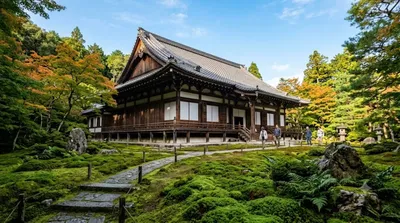
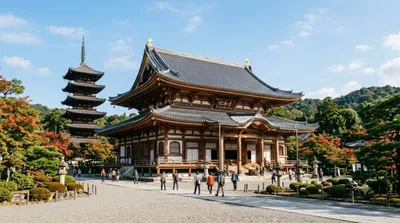
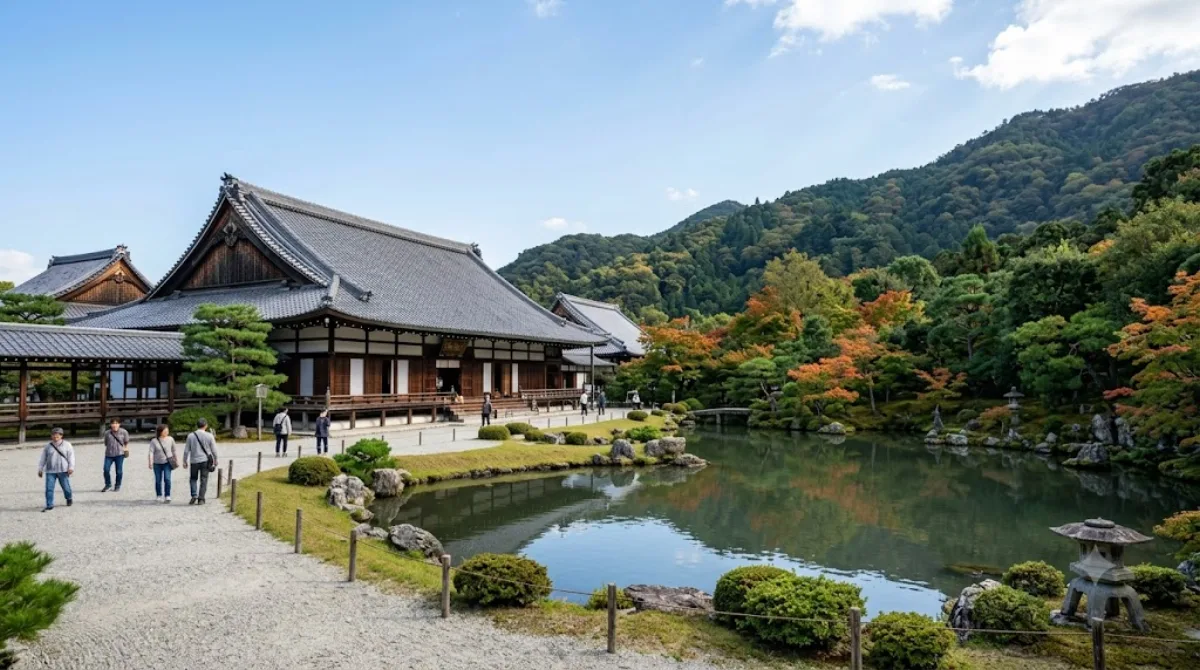
Tenryū-ji is a large Zen temple complex in the Rinzai tradition, founded in 1339 by shogun Ashikaga Takauji to honor Emperor Go-Daigo. Its main draw is the Sōgen-chi Garden, a pond-and-rock garden attributed to the temple's first abbot, Musō Soseki, which uses the wooded hills of Arashiyama as borrowed scenery. The garden survives largely as it was originally laid out, even though the temple's buildings have burned down and been rebuilt multiple times over the centuries. It's a UNESCO World Heritage Site as part of the "Historic Monuments of Ancient Kyoto" listing.
Getting there
From central Kyoto, take the JR Sagano/San'in Line to Saga-Arashiyama Station, or the Randen (Keifuku) tram to Arashiyama Station; either way it's roughly a 20-25 minute ride, followed by a short walk of a few minutes to the temple's north or main gate.
How long to stay
An hour is usually enough to walk the garden and main hall. If you also want to continue through the temple's north gate into the bamboo grove, allow closer to 1.5-2 hours in total.
When to go
Arashiyama is one of the most visited parts of Kyoto, so mornings tend to be calmer than midday, especially around the temple entrance and the adjacent bamboo path. Cherry blossom season (late March-early April) and autumn foliage (November) draw the largest crowds, though these are also when the garden looks its best.
What to combine it with
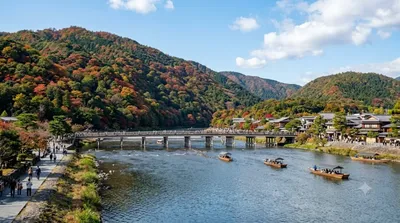
- Arashiyama (1km) — the district itself, including the bamboo grove reached via Tenryū-ji's north gate, and the Togetsukyo Bridge area.
- Saihō-ji Temple (2.8km) — another Zen garden temple, known for its moss garden.
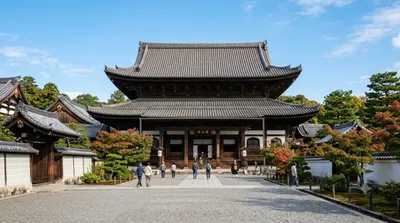
- Myōshin-ji Temple (4.3km) and Ninna-ji Temple (4km) — both further temple complexes worth a half-day if continuing west Kyoto sightseeing.
Updated September 20, 2026 · Edited by the World by City editors
 GetYourGuide
 Klook
Klook
 Tiqets
 KKday
KKday
 WeGoTrip
 Booking.com
 Hotels.com