Temples & religious sites
Ninna-ji Temple
What it is
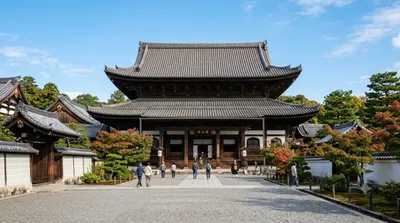
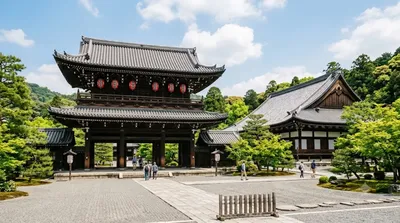
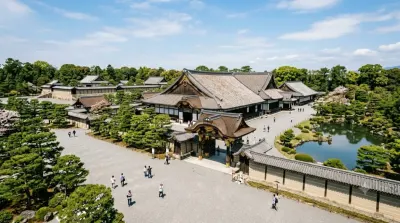
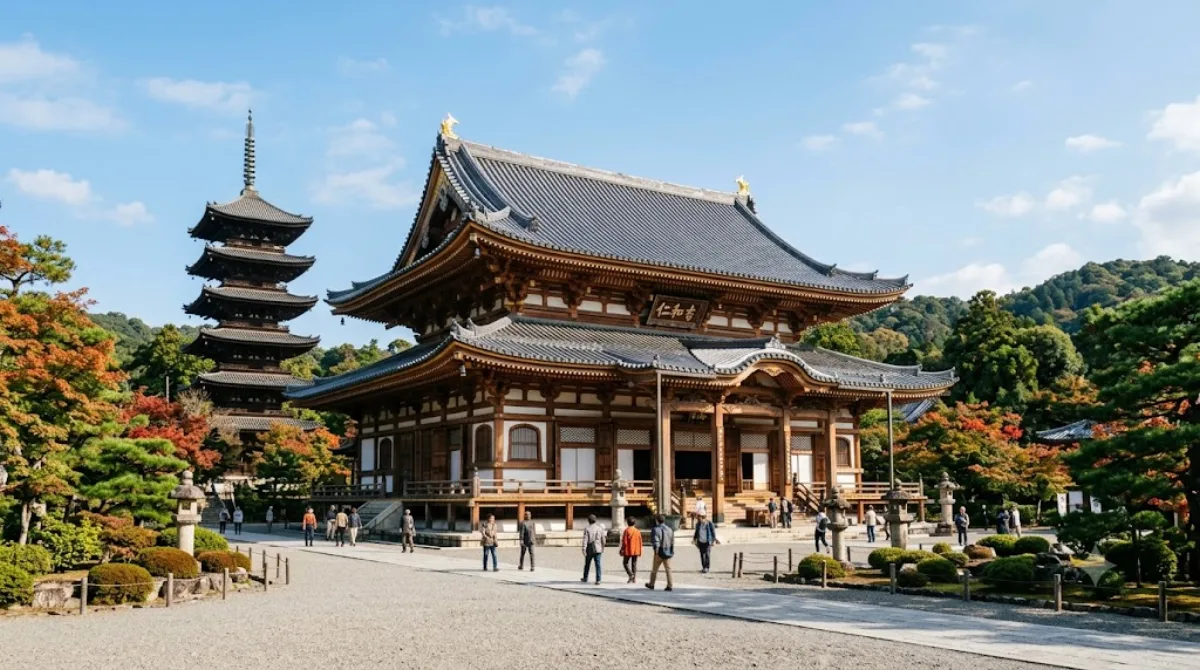
Ninna-ji is the head temple of the Omuro branch of Shingon Buddhism, founded in 888 and rebuilt in the 17th century after the original complex was destroyed in the Onin War. It's part of the Historic Monuments of Ancient Kyoto UNESCO listing. The grounds include a five-story pagoda, a wide temple gate (Nio-mon), and the Goten, a former residence of retired emperors with connected halls and gardens that give a sense of imperial-era architecture rather than a purely religious atmosphere. It's also known for a grove of low-growing Omuro cherry trees, planted so their blossoms sit at eye level.
Getting there
From central Kyoto (Kyoto Station area), the temple is reachable by city bus in roughly 40-50 minutes depending on traffic, or by a combination of the Randen (Keifuku) tram line and a short walk, which tends to be more reliable timing-wise. If you're coming from Kansai International Airport (KIX), plan on the airport-to-city-centre leg first, then the local transfer to Ninna-ji.
Time to allow
Most visitors spend around 1 to 1.5 hours covering the main gate, pagoda, and Goten complex. Add extra time if you plan to walk through the cherry grove during bloom season, as it can involve some queuing.
When to go
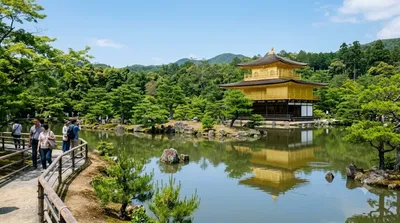
Late morning on a weekday is generally calmer. The Omuro cherry trees bloom later than most other Kyoto cherries, so early-to-mid April tends to draw heavy crowds specifically for that grove. Outside cherry season, the temple is noticeably quieter than nearby Kinkaku-ji.
Combine it with
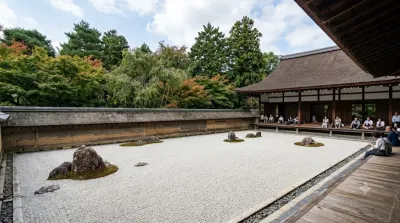
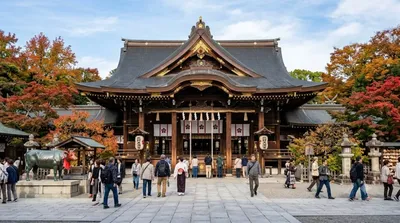
Ryōan-ji Temple is about 0.5km away, an easy walk, and Myōshin-ji Temple is roughly 1.1km further. Kinkaku-ji is about 1.6km away and Kitano Tenmangū around 1.9km, both manageable as part of a longer walking or bus-linked route through this part of western Kyoto.
Updated September 21, 2026 · Edited by the World by City editors
 GetYourGuide
 Klook
Klook
 Tiqets
 KKday
KKday
 WeGoTrip
 Booking.com
 Hotels.com