World by City

Temples & religious sites

Shimogamo Shrine
Shimogamo Shrine

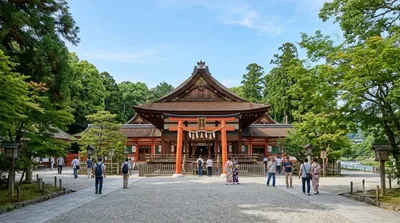
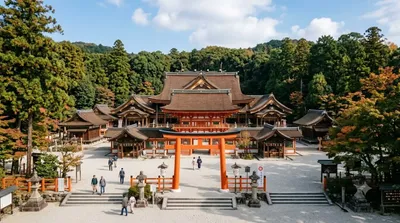
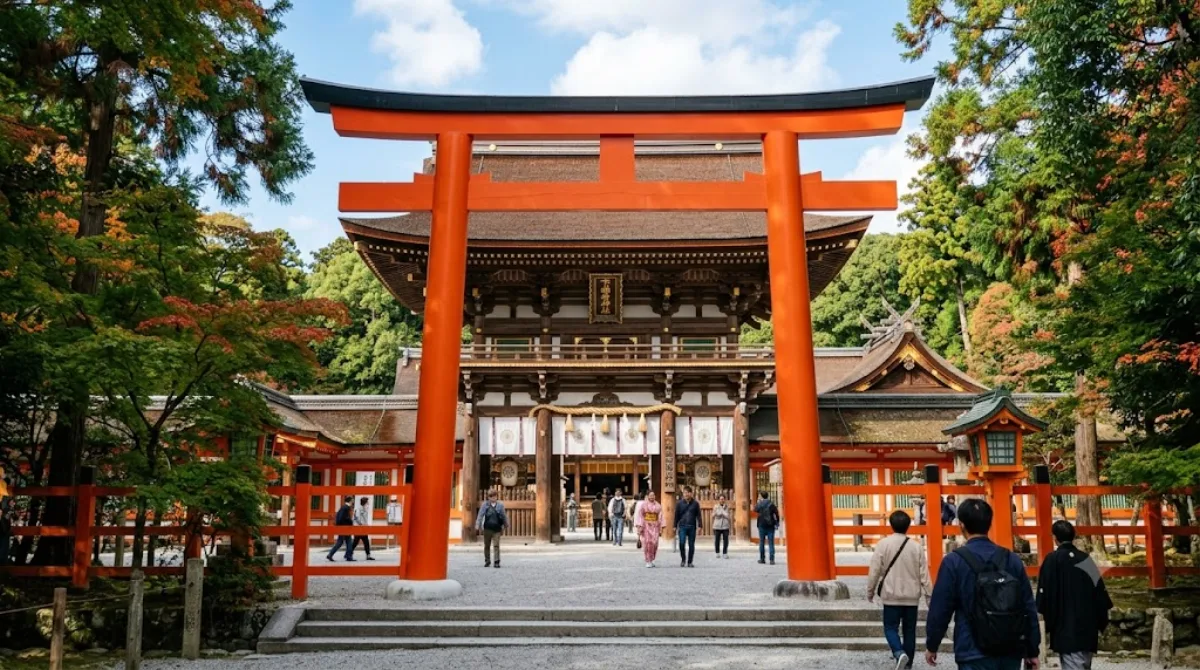
Shimogamo Shrine is an important Shinto sanctuary in the Shimogamo district of Kyoto city's Sakyō ward. Its formal name is Kamo-mioya Shrine . It is one of the oldest Shinto shrines in Japan and is one of the seventeen Historic Monuments of Ancient Kyoto which have been designated by UNESCO as a World Heritage Site. The term Kamo-jinja in Japanese is a general reference to Shimogamo Shrine and Kamigamo Shrine, the traditionally linked Kamo shrines of Kyoto; Shimogamo is the older of the pair, being believed to be 100 years older than Kamigamo, and dating to the 6th century, centuries before K...

What it is

Shimogamo Shrine is one of the two Kamo shrines that predate most of Kyoto itself, with roots going back to at least the 6th century. It sits at the tip of a triangle of land where the Takano and Kamo rivers meet, and reaching the shrine buildings means walking through Tadasu no Mori, a stretch of old-growth forest that has survived largely intact within the city. The shrine complex includes vermilion-lacquered halls, a stream used for purification rituals, and a set of subshrines linked to the twelve zodiac animals. It's a good stop for anyone interested in Shinto architecture or in seeing how a shrine forest looks compared to a manicured temple garden.

Getting there

From central Kyoto, the shrine is reachable by city bus (routes serving Shimogamo-jinja-mae) in around 20-30 minutes depending on your starting point, or by a combination of train and a short walk. Taxis from downtown take roughly 15-20 minutes barring traffic.

Time to allow

Plan for about an hour, including the walk through Tadasu no Mori, which itself takes 10-15 minutes each way at a relaxed pace.

When to go

Early morning is quieter and cooler for the forest walk. The shrine hosts the Aoi Matsuri procession in May and gets busy around New Year, so expect crowds at those times. Otherwise it's noticeably calmer than more central sightseeing spots.

Combine it with

  • Kyoto Imperial Palace (1.8km) - close enough to pair in one outing, especially if you're walking or cycling.
  • Heian Jingū (2.6km) - a contrasting example of a much newer, more brightly colored shrine.
  • Ginkaku-ji Temple (2.7km) - can be combined via the Philosopher's Path for a longer half-day route.

Sources: open data from Wikipedia and OpenStreetMap · Updated August 5, 2026 · Edited by the World by City editors

Tickets & tours

Admission prices and opening hours change often, so we don't list them here. Check what's on sale and at what price below — booking ahead can cut the queue at some places.

This place may not appear in the results — some sites are free to enter or sell tickets only at the gate.

Stays near Shimogamo Shrine

Sorted by distance, walkable ones first. Distances are straight-line.

Map © OpenStreetMap contributors. Lines are straight connections, not actual routes.

Shimogamo Shrine Nearby stays

Locations and names come from OpenStreetMap. Check prices and availability on the booking sites.

Good to visit alongside

Kyoto Imperial Palace

Castles & palaces

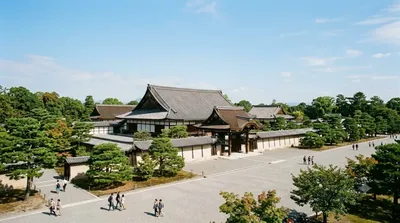
Kyoto Imperial Palace

The Kyōto Imperial Palace , also known as Dairi (内裏) or Kinri (禁裏), is the former palace of the Emperor of Japan from 1331 to 1869 located in Kamigyō-ku, Kyoto, Japan. Since the Meiji Restoration in 1869, the Emperors have resided at the Tokyo Imperial Palace, while the preservation of the Kyoto Imperial Palace was ordered in 1877. Today, the grounds are open to the public, and the Imperial Household Agency hosts public tours of the buildings several times a day.

1.8 km away

Daitoku-ji Temple

Temples & religious sites

Daitoku-ji Temple

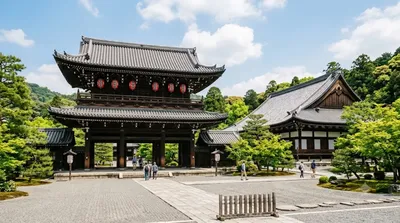
Daitoku-ji is a Rinzai school Zen Buddhist temple in the Murasakino neighborhood of Kita-ku in the city of Kyoto Japan. Its (sangō) is Ryūhōzan (龍宝山). The Daitoku-ji temple complex is one of the largest Zen temples in Kyoto, covering more than 23 hectares. In addition to the main temple complex including the Buddha Hall and the lecture hall, there are more than 20 sub-temples on the grounds. Daitokuji has produced many famous monks and has a deep connection with the tea ceremony culture, making it a temple that has had a great influence on Japanese culture. The main temple and sub-temples...

2.5 km away

Heian Jingū

Temples & religious sites

Heian Jingū

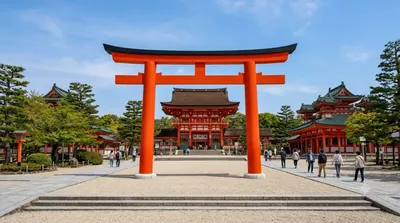
The Heian Shrine is a Shinto shrine located in Sakyō-ku, Kyoto, Japan. The Shrine is ranked as a Beppyō Jinja (別表神社) by the Association of Shinto Shrines. It is listed as an important cultural property of Japan.

2.6 km away

Ginkaku-ji Temple

Temples & religious sites

Ginkaku-ji Temple

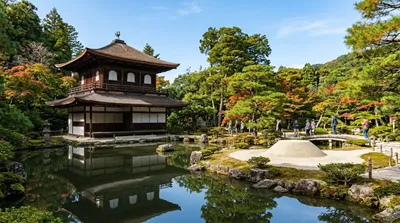
Ginkaku-ji , officially named Jishō-ji , is a Zen temple in the Sakyo ward of Kyoto, Japan. It is one of the constructions that represent the Higashiyama Culture of the Muromachi period.

2.7 km away

Kamo Shrine

Temples & religious sites

Kamo Shrine

Kamo Shrine is a general term for an important Shinto sanctuary complex on both banks of the Kamo River in northeast Kyoto. It is centered on two shrines. The two shrines, an upper and a lower, lie in a corner of the old capital which was known as the "devil's gate" due to traditional geomancy beliefs that the north-east corner brought misfortune. Because the Kamo River runs from the north-east direction into the city, the two shrines along the river were intended to prevent demons from entering the city.

3.0 km away

Kamigamo Shrine

Temples & religious sites

Kamigamo Shrine

Kamigamo Shrine is an important Shinto sanctuary on the banks of the Kamo River in north Kyoto, first founded in 678. Its formal name is the Kamo-wakeikazuchi Shrine .

3.0 km away