
La Paz · First-time guide
How to Plan Your First Trip to La Paz: Districts, Altitude, and Transit
August 29, 2026 · last updated · about 3 min read
Understanding the Canyon Layout
La Paz sits inside a steep valley bowl beneath Mount Illimani. El Alto occupies the high plateau at the canyon rim. Below lies the historic core around El Centro and San Pedro. Further down and noticeably warmer, Sopocachi offers a green, bohemian neighborhood, while Zona Sur sits at the lowest elevation in the valley.
Getting In and Around
Flights arrive at El Alto International Airport (LPB) on the plateau. Take an authorized airport taxi directly down into the city to reach a lower sleeping altitude. For getting around, use Mi Teleférico, the aerial cable car system connecting El Alto, Centro, and Zona Sur above street traffic. For surface trips, rely on dispatched radio taxis rather than flagging unmarked cars.
First-Timer Mistakes to Avoid
- Pushing through altitude sickness: Arriving at high elevation strains your body. Dedicate your first day to rest, stay hydrated, and sleep in lower districts like Sopocachi or Zona Sur.
- Walking uphill: Steep streets will quickly exhaust you. Use cable cars to ascend and save walking for flat or downhill routes.
- Drinking untreated tap water: Use sealed bottled or filtered water, even when brushing teeth.
A Sensible Trip Sequence
Spend your first 48 hours resting and taking in views from the cable car lines. Explore flat areas around Plaza Murillo and the Witches' Market (Mercado de las Brujas) at an easy pace.
Leave strenuous day trips—such as Tiwanaku, Valle de la Luna, or Lake Titicaca—for later in your visit once your body has adapted to the thin air.
Pick your dates — we'll search La Paz hotels for you
Choose dates and guests, and the buttons below will open search results with your criteria. Prices differ between sites, so compare before you book.
 View on Booking.com
 View on Hotels.com
Things to see in La Paz
See all →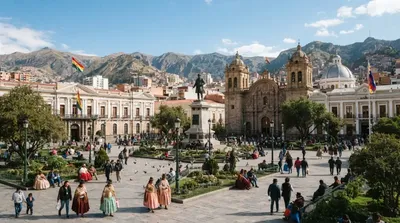
Parks & gardens
Plaza Murillo
This central square sits in the heart of La Paz's old town and serves as the stage of Bolivian politics. Surrounded by major landmarks such as the Presidential Palace, the Legislative Assembly, and the cathedral, it lets visitors take in the city's history all at once.
Temples & religious sites
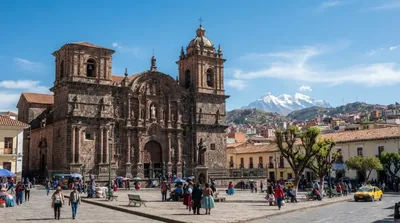
Basilica of San Francisco, La Paz, Bolivia
A Catholic church at Plaza San Francisco in the heart of downtown La Paz. Dedicated to Saint Francis of Assisi, it is one of the city's landmark sights.
Temples & religious sites
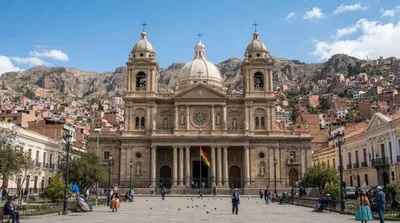
Cathedral Basilica of Our Lady of Peace, La Paz
A cathedral located on Plaza Murillo in La Paz, built in 1835 in a neoclassical style with Baroque elements. Its interior is divided into five naves, creating a grand sense of space.

Castles & palaces
Palacio Quemado
The Palacio Quemado, located on Plaza Murillo in central La Paz, served as the presidential residence from 1853 to 2018. With La Paz Cathedral and the National Congress nearby, it's a fine stop on a historic walk through the city center.
More La Paz guides
Best value
Where to Stay in La Paz for the Best Value
5-star & luxury
Where to stay in La Paz for luxury accommodations and altitude comfort
Pool villas & resorts
Where to Stay in La Paz for Resorts and Pool Villas
Family travel
Where to stay in La Paz with family: best areas and practical booking advice
Couples & honeymoon
Where to stay in La Paz for a couples trip or honeymoon
Central & near stations
Where to stay in La Paz for central access and cable car stations
Best time to visit
When Is the Best Time to Visit La Paz, Bolivia?
Getting around
How to Get Around La Paz: Cable Cars, Buses, and Airport Transfers
First-time guide guides for other destinations
Guantánamo
First-Timer Guide to Guantánamo, Cuba: Layout, Transport, and Practical Tips
Cetinje
How to Plan Your First Trip to Cetinje: Layout, Transport, and Key Sights
North Nicosia
First-timer's guide to visiting North Nicosia: borders, layout, and transit
Cienfuegos
First-Timer Guide to Cienfuegos: Layout, Transport, and Practical Tips