World by City

Heritage & monuments

Colossi of Memnon
Open in Maps
Colossi of Memnon

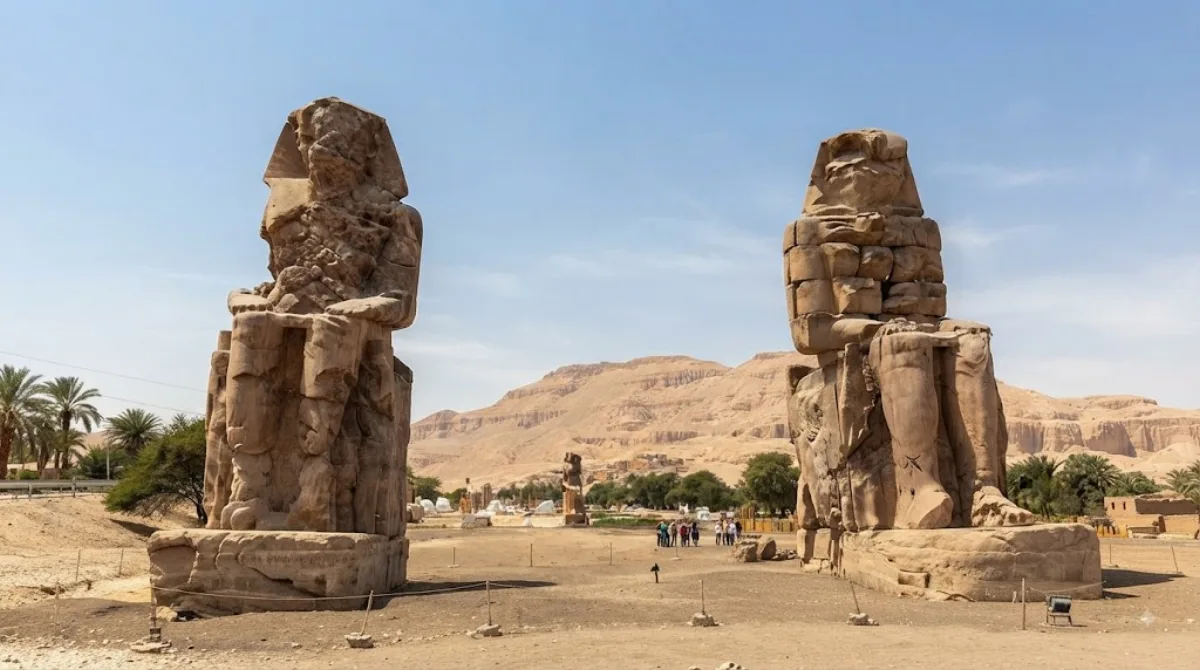
The Colossi of Memnon

These two massive stone statues date back to approximately 1350 BCE. They originally served as guards for the mortuary temple of Pharaoh Amenhotep III in the Theban Necropolis. Visitors go here to see the scale of these ancient monuments and the remnants of the temple complex they once protected.

Getting There

The statues are located on the West Bank of the Nile. From Luxor city centre, you must cross the river via ferry or bridge and take a taxi or carriage to the site. The journey typically takes 20 to 30 minutes depending on traffic and the crossing method.

Visit Duration

Because the statues are open-air and located along the roadside, most travelers spend between 30 and 60 minutes here. This allows enough time to walk around the base of the monuments and take photographs.

When to Visit

Early morning is recommended to avoid the midday heat and the largest crowds. The site is an open area with little shade, making it particularly hot during the summer months. It frequently attracts tour buses, so arriving early helps avoid the peak congestion.

Nearby Attractions

The site is situated close to several other archaeological landmarks on the West Bank. You can combine this visit with the following nearby locations:

  • Ramesseum: 0.8km
  • Medinet Habu: 1km
  • Mortuary Temple of Ramesses III: 1km
  • KV20: 1.8km

Updated September 8, 2026 · Edited by the World by City editors

Tickets & tours

Admission prices and opening hours change often, so we don't list them here. Check what's on sale and at what price below — booking ahead can cut the queue at some places.

This place may not appear in the results — some sites are free to enter or sell tickets only at the gate.

Stays near Colossi of Memnon

Sorted by distance, walkable ones first. Distances are straight-line.

Map and place data © OpenStreetMap contributors

Colossi of Memnon Nearby stays

Check prices and availability on the booking sites.

Pick your dates — we'll search Luxor hotels for you

Choose dates and guests, and the buttons below will open search results with your criteria. Prices differ between sites, so compare before you book.

Hotel membership

Staying at Accor hotels often? ALL Accor+ Explorer

A paid annual membership. It includes two free nights a year across Asia-Pacific, 30% off dining and 15% off drinks, and 15% off stays at more than 4,500 hotels worldwide.

Explore the membership

Good to visit alongside

Ramesseum

Temples & religious sites

Ramesseum

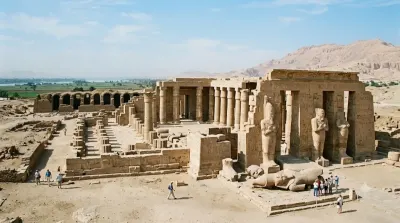
This is the mortuary temple of Ramesses II, located in the Theban Necropolis on the west bank of the Nile in Luxor, Egypt. Looking across the river toward Luxor's city center, visitors can explore the traces of an ancient Egyptian king.

0.8 km away

Medinet Habu

Heritage & monuments

Medinet Habu

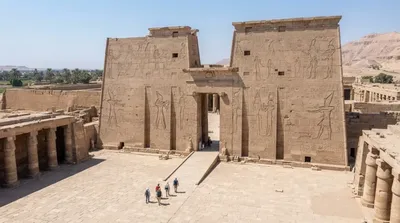
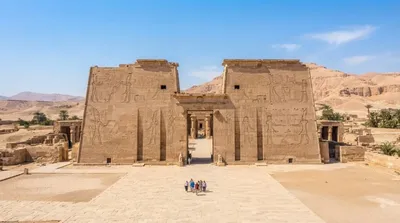
Medinet Habu is an archaeological site at the foot of the Theban hills on the west bank of the Nile at Luxor, and the mortuary temple of Ramesses III is considered its best-preserved structure. It offers a close look at the grand temple architecture of ancient Egypt's New Kingdom.

1.0 km away

Mortuary Temple of Ramesses III

Heritage & monuments

Mortuary Temple of Ramesses III

A mortuary temple from Ancient Egypt's New Kingdom, set on the west bank of the Nile at the foot of the Theban hills. Built in honor of Ramesses III, it is remarkably well preserved, letting visitors take a close look at its grand temple architecture.

1.0 km away

KV20

Heritage & monuments

KV20

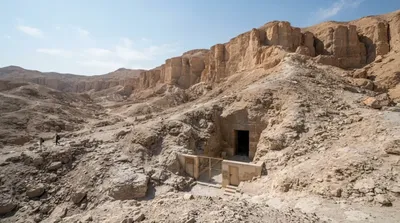
Believed to be the earliest royal tomb built in Egypt's Valley of the Kings, KV20 was originally the burial place of Thutmose I before his daughter Hatshepsut had it enlarged to hold both their burials. Howard Carter completed its excavation in 1903–1904.

1.8 km away

KV55

Heritage & monuments

KV55

KV55 is a tomb in the Valley of the Kings, excavated in 1907. It's a fascinating site where the identity of the remains found inside has long been debated, with Akhenaten considered a possible candidate.

1.8 km away

WV25

Heritage & monuments

WV25

An unfinished tomb in the western Valley of the Kings, believed to have been started as Akhenaten's Theban tomb before being abandoned. Giovanni Belzoni discovered it in 1817 and found eight mummies inside, and a University of Minnesota expedition carried out further excavation in 1972.

1.8 km away