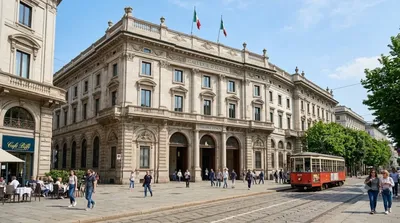
Temples & religious sites
San Carlo al Corso
What it is
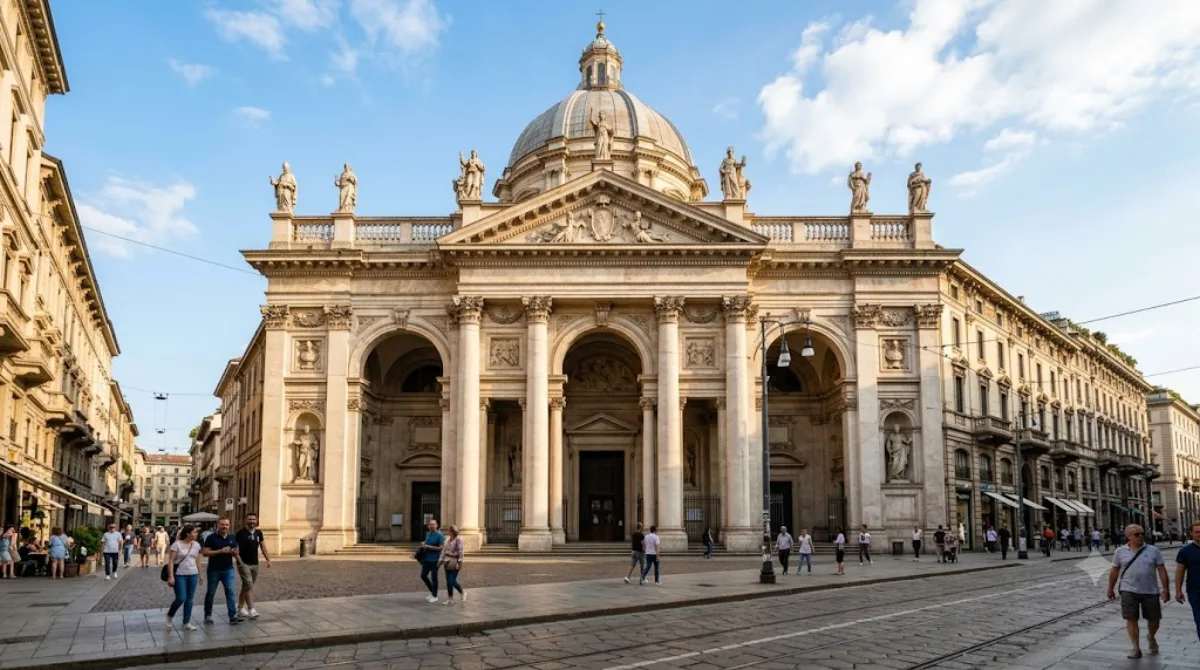
San Carlo al Corso is a 19th-century neoclassical Catholic church facing Corso Vittorio Emanuele II, one of Milan's main pedestrian shopping streets. Its most recognisable feature is a large domed rotunda, modelled on the Pantheon in Rome, which sets it apart from the Gothic and Renaissance churches more typical of the city. Inside, the circular plan and coffered dome make it worth a stop for anyone interested in architecture, even without a religious motivation.
Getting there
The church sits just off Piazza San Babila in the city centre, an easy 10-15 minute walk from the Duomo along Corso Vittorio Emanuele II. The San Babila metro stop (line M1) is a couple of minutes away on foot, making it a simple add-on if you're already exploring the centre on foot or by metro.
Time to allow
Because it's a single-room rotunda, 15-20 minutes is enough to look around the interior and dome. It works well as a short stop between other sights rather than a planned destination in itself.
When to go
The church sits on a busy shopping street, so the surrounding area is crowded with pedestrians and shoppers most of the day, particularly on weekend afternoons. The interior itself tends to stay quieter, though services will affect access to parts of the building. Mornings on weekdays are generally the calmest time to visit.
Combine it with
Via Monte Napoleone, Milan's main luxury shopping street, is only 0.2km away, making it a natural pairing if you're in the area for retail as well as sightseeing. The Museo Poldi Pezzoli (0.5km) offers a contrast with its house-museum collection of paintings and decorative arts. For more church architecture, San Bernardino alle Ossa and the Basilica di Santo Stefano Maggiore are both about 0.4km away and can be visited together on the same walk.
Updated September 20, 2026 · Edited by the World by City editors
 GetYourGuide
 Klook
Klook
 Tiqets
 KKday
KKday
 WeGoTrip
 Booking.com
 Hotels.com