World by City

Nature

Kokuba River

Kokuba River

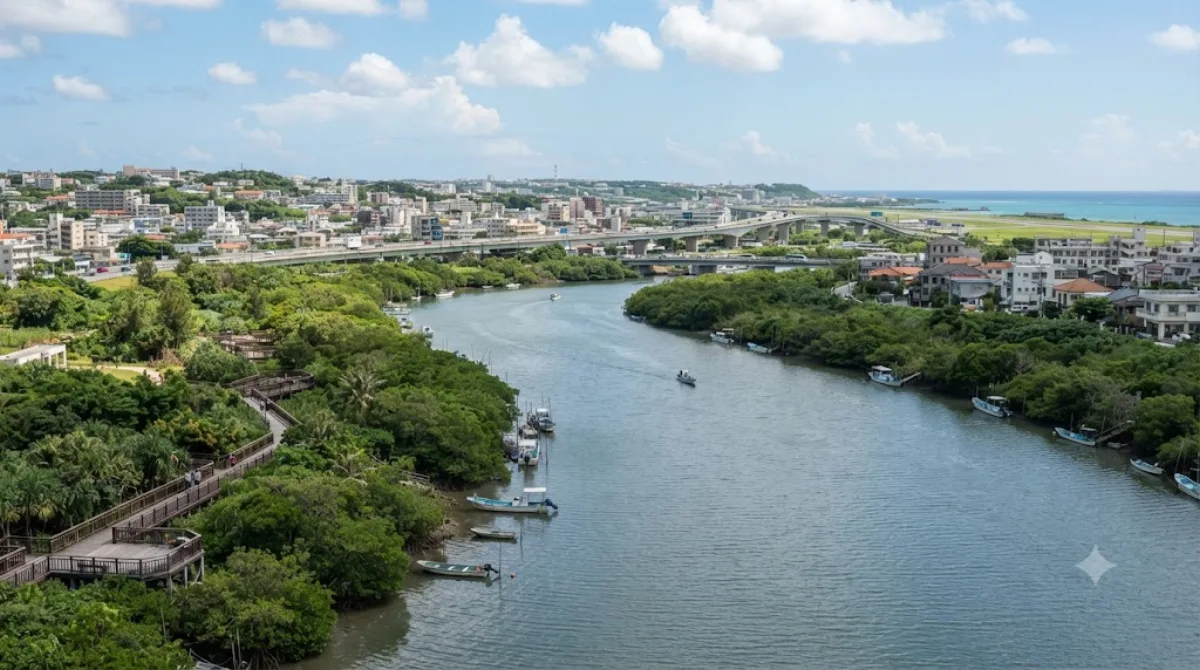
The Kokuba River is a river in Naha, Okinawa, and is the hydrographic resource for domestic urban fresh water. A number of geographical places on Okinawa bear its name, such as Lake Man Park (漫湖公園) and Kokuba Danchi (国場団地). The river flows into the East China Sea.

What it is

The Kokuba River flows through Naha and is the city's main source of fresh water, but for a visitor it's really an urban green corridor rather than a scenic destination in its own right. The stretch worth seeing is around Man Park (Manko), a wetland area on the river's lower course that's registered as a Ramsar site for the waterbirds that use it, including migratory species that stop over outside the hottest months. It's a place for a walk along the water and some birdwatching rather than a dramatic landscape.

Getting there

From central Naha, the Man Park area is a short taxi or bus ride, generally under 20 minutes depending on traffic. There's no monorail stop directly at the park, so a taxi is the more straightforward option if you're coming from the main tourist strip near Kokusai-dori.

How long to spend

An hour is enough to walk a section of the riverside path and look for birds. If you want to cover more of the park and read the information signage, allow closer to two hours.

When to go

Early morning or late afternoon is best for birdwatching, when activity is higher and the heat is more manageable. Winter months tend to bring more migratory birds than summer. The area is not typically crowded, so timing is more about comfort and wildlife visibility than avoiding people.

Combining with nearby sights

The river and park sit a couple of kilometers from several of Naha's cultural sites, making them easy to fold into the same day rather than a separate trip:

  • Okinawa Shrine — about 2km away
  • Shikina-en — about 2.1km away
  • Enkaku-ji — about 2.6km away
  • Sonohyan-utaki — about 2.8km away

Sources: open data from Wikipedia and OpenStreetMap · Updated August 5, 2026 · Edited by the World by City editors

Tickets & tours

Admission prices and opening hours change often, so we don't list them here. Check what's on sale and at what price below — booking ahead can cut the queue at some places.

This place may not appear in the results — some sites are free to enter or sell tickets only at the gate.

Stays near Kokuba River

Sorted by distance, walkable ones first. Distances are straight-line.

Map © OpenStreetMap contributors. Lines are straight connections, not actual routes.

Kokuba River Nearby stays

Locations and names come from OpenStreetMap. Check prices and availability on the booking sites.

Good to visit alongside

Okinawa Shrine

Temples & religious sites

Okinawa Shrine

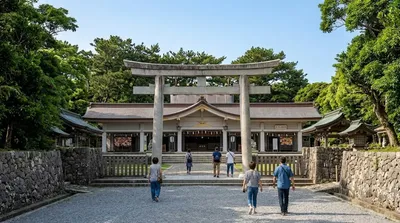
Okinawa Shrine is a Shinto shrine in Naha, Okinawa Prefecture, Japan. Established at the end of the Taishō period on the site of Shuri Castle, the main hall of which was reused as the haiden, the shrine buildings were destroyed in May 1945 during the Battle of Okinawa. Both castle and shrine have since been rebuilt while this phase has been written out of the "official history" currently told at Shurijō Castle Park.

2.0 km away

Shikina-en

Parks & gardens

Shikina-en

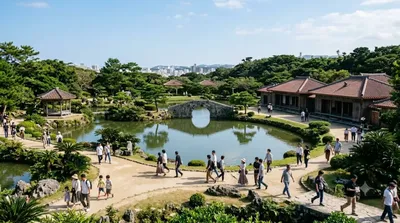
The gardens of Shikina-en (識名園) are located on a small hill to the south of Shuri Castle in Naha, Okinawa. The residence and its gardens are also known as Sichina-nu-udun or Nan'en, as opposed to the Tōen of Uchaya-udun, laid out on a small hill east of Shuri Castle in 1677. In 1992 Hiroshi Shō, the great-grandson of Shō Tai, the last king of the Ryūkyū Kingdom, donated the royal mausoleum of Tamaudun and Shikina-en to the City of Naha.

2.1 km away

Enkaku-ji

Temples & religious sites

Enkaku-ji

Enkaku-ji was a Buddhist temple located in the Shuritonokuracho neighborhood of the city of Naha, Okinawa Prefecture, Japan. It belonged to the Rinzai school sect of Japanese Zen and its honzon is a Shaka Sanzon trinity of Shaka Nyorai, Monju Bosatsu and Fugen Bosaatsu. The temple's full name is Tentoku-san Enkaku-ji. It was the bodaiji of the kings of Second Shō dynasty of the Ryūkyū Kingdom. The site of the temple was designated a National Historic Site of Japan in 1972.

2.6 km away

Sonohyan-utaki

Heritage & monuments

Sonohyan-utaki

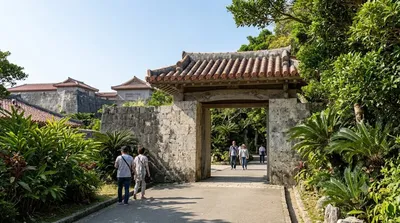
Sonohyan-utaki is a sacred grove of trees and plants (utaki) of the traditional indigenous Ryukyuan religion. It is located on the grounds of Shuri Castle in Naha, Okinawa, a few paces away from the Shureimon castle gate. The utaki, or more specifically its stone gate, is one of a number of sites which together comprise the UNESCO World Heritage Site officially described as Gusuku Sites and Related Properties of the Kingdom of Ryukyu, and has been designated an Important Cultural Property by the Japanese national government.

2.8 km away

Shureimon

Heritage & monuments

Shureimon

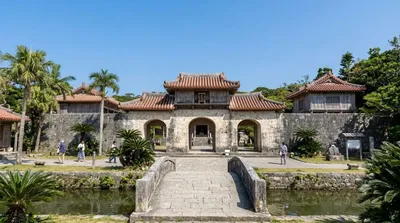
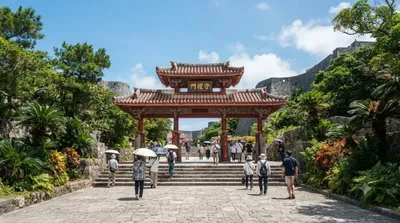
Shureimon is a gate in the Shuri neighborhood of Naha, the capital of Okinawa Prefecture, Japan. It was the second of Shuri Castle's main gates. Now it is the main gate to the castle complex. Chūzanmon was the first ceremonial gate to Shurijo, built around 1427 by King Shō Hashi, and it was demolished in 1907.

2.8 km away

Tamaudun

Heritage & monuments

Tamaudun

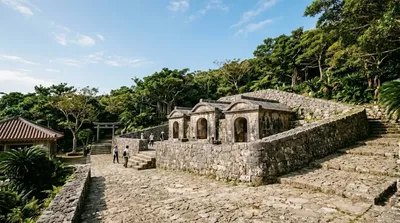
Tamaudun (玉陵) is one of the three royal mausoleums of the Second Shō Dynasty of kings of the Ryukyu Kingdom, along with Urasoe yōdore at Urasoe Castle and Izena Tamaudun near Izena Castle in Izena, Okinawa. The mausoleum is located in Shuri, Okinawa, and was built in 1501 by King Shō Shin, the third king, to bury his father, King Shō En a short distance from Shuri Castle. The Tamaudun complex was designated a National Historic Site in 1972. It was designated a World Heritage Site by UNESCO on December 2, 2000, as a part of the site group Gusuku Sites and Related Properties of the Kingdom of...

3.0 km away