World by City

Heritage & monuments

Tamaudun
Tamaudun

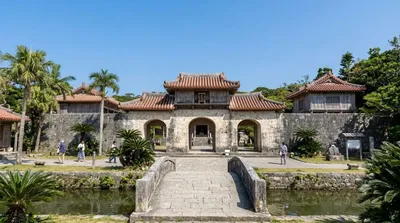
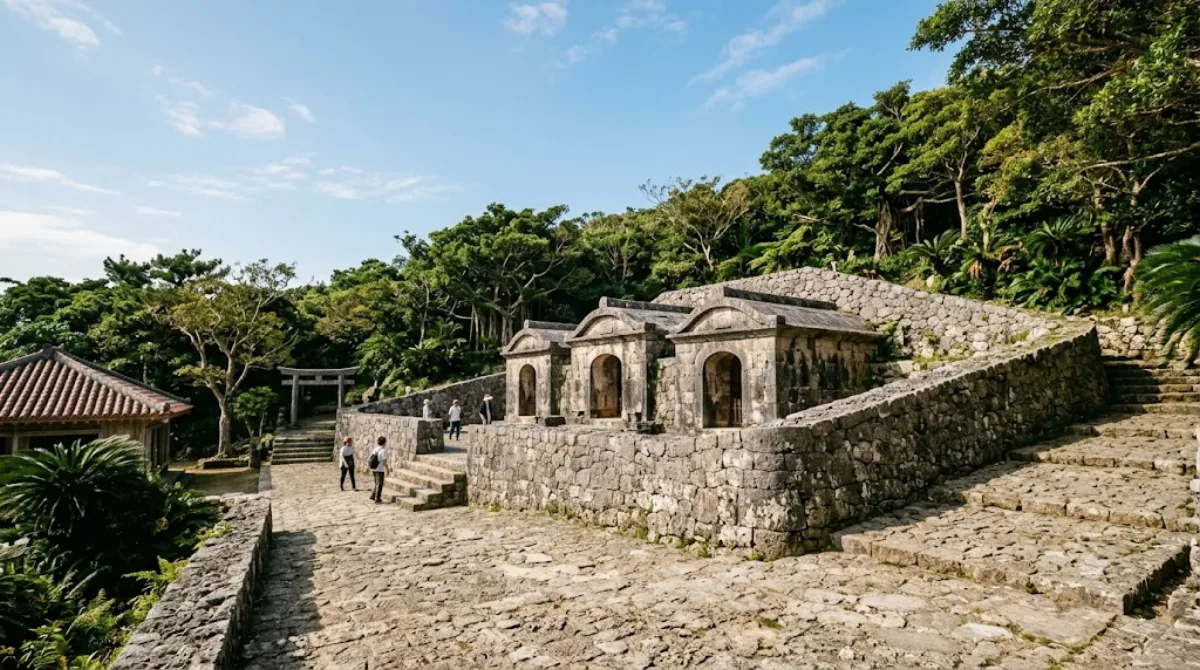
Tamaudun (玉陵) is one of the three royal mausoleums of the Second Shō Dynasty of kings of the Ryukyu Kingdom, along with Urasoe yōdore at Urasoe Castle and Izena Tamaudun near Izena Castle in Izena, Okinawa. The mausoleum is located in Shuri, Okinawa, and was built in 1501 by King Shō Shin, the third king, to bury his father, King Shō En a short distance from Shuri Castle. The Tamaudun complex was designated a National Historic Site in 1972. It was designated a World Heritage Site by UNESCO on December 2, 2000, as a part of the site group Gusuku Sites and Related Properties of the Kingdom of...

Tamaudun: royal mausoleum in Shuri

Tamaudun is the burial site of the Second Shō Dynasty, the royal line that ruled the Ryukyu Kingdom from Shuri Castle. King Shō Shin built it in 1501 to inter his father, King Shō En, and it served as the resting place for Ryukyuan kings and their families for centuries. The site consists of stone-walled chambers carved into a coral limestone outcrop, roofed in a style that echoes traditional Ryukyuan tomb architecture. It's one of three royal mausolea of the dynasty, and along with Shuri Castle it's part of the UNESCO-listed Gusuku Sites group. Visitors come mainly for the stonework and the sense of the site's role in Ryukyuan royal history, rather than for elaborate interior displays, since the burial chambers themselves are not open for entry.

Getting there

Tamaudun sits just outside Shuri Castle's grounds, a short walk from central Naha. From the Yui Rail monorail's Shuri Station, it's roughly a 15-20 minute walk uphill. Many visitors combine the walk with a visit to Shuri Castle itself, arriving from the same direction.

How much time to allow

Most people spend 20-30 minutes here, enough to walk the grounds and view the tomb structures from outside.

When to go

Mornings tend to be quieter, especially before Shuri Castle's crowds build up later in the day. Because much of the site is outdoors on stone paving, summer heat can make midday visits uncomfortable.

Nearby

  • Shureimon (0.2km) - the well-known gate marking the approach to Shuri Castle
  • Sonohyan-utaki (0.3km) - a sacred grove and ritual site tied to Ryukyuan royal ceremony
  • Enkaku-ji (0.5km) - the former royal temple of the Ryukyu Kingdom

These sites, along with Shuri Castle, can reasonably be covered together in a single half-day outing.

Sources: open data from Wikipedia and OpenStreetMap · Updated August 5, 2026 · Edited by the World by City editors

Tickets & tours

Admission prices and opening hours change often, so we don't list them here. Check what's on sale and at what price below — booking ahead can cut the queue at some places.

This place may not appear in the results — some sites are free to enter or sell tickets only at the gate.

Stays near Tamaudun

Sorted by distance, walkable ones first. Distances are straight-line.

Map © OpenStreetMap contributors. Lines are straight connections, not actual routes.

Tamaudun Nearby stays

Locations and names come from OpenStreetMap. Check prices and availability on the booking sites.

Itineraries including this place

Good to visit alongside

Shureimon

Heritage & monuments

Shureimon

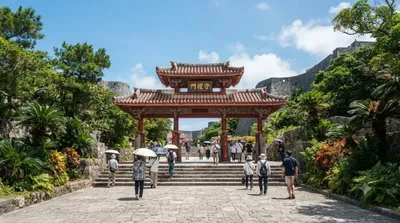
Shureimon is a gate in the Shuri neighborhood of Naha, the capital of Okinawa Prefecture, Japan. It was the second of Shuri Castle's main gates. Now it is the main gate to the castle complex. Chūzanmon was the first ceremonial gate to Shurijo, built around 1427 by King Shō Hashi, and it was demolished in 1907.

0.2 km away

Sonohyan-utaki

Heritage & monuments

Sonohyan-utaki

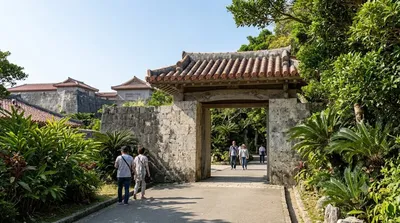
Sonohyan-utaki is a sacred grove of trees and plants (utaki) of the traditional indigenous Ryukyuan religion. It is located on the grounds of Shuri Castle in Naha, Okinawa, a few paces away from the Shureimon castle gate. The utaki, or more specifically its stone gate, is one of a number of sites which together comprise the UNESCO World Heritage Site officially described as Gusuku Sites and Related Properties of the Kingdom of Ryukyu, and has been designated an Important Cultural Property by the Japanese national government.

0.3 km away

Enkaku-ji

Temples & religious sites

Enkaku-ji

Enkaku-ji was a Buddhist temple located in the Shuritonokuracho neighborhood of the city of Naha, Okinawa Prefecture, Japan. It belonged to the Rinzai school sect of Japanese Zen and its honzon is a Shaka Sanzon trinity of Shaka Nyorai, Monju Bosatsu and Fugen Bosaatsu. The temple's full name is Tentoku-san Enkaku-ji. It was the bodaiji of the kings of Second Shō dynasty of the Ryūkyū Kingdom. The site of the temple was designated a National Historic Site of Japan in 1972.

0.5 km away

Sueyoshi-gū

Temples & religious sites

Sueyoshi-gū

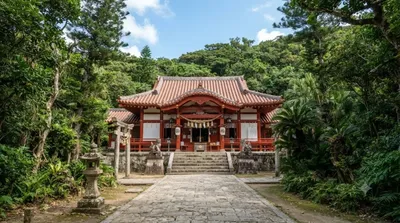
Sueyoshi Shrine is a Shinto shrine in the Shuri-Sueyoshi neighborhood of the city of Naha in Okinawa Prefecture, Japan. Its grounds were designated a National Historic Site in 1972. The main festival of the shrine is held annually on November 23. It is one of the Eight Shrines of Ryūkyū, a group of eight shrines that were officially supported by the Ryukyu Kingdom. These official shrines received salaries and maintenance expenses for their priests from the royal court,

1.3 km away

Shikina-en

Parks & gardens

Shikina-en

The gardens of Shikina-en (識名園) are located on a small hill to the south of Shuri Castle in Naha, Okinawa. The residence and its gardens are also known as Sichina-nu-udun or Nan'en, as opposed to the Tōen of Uchaya-udun, laid out on a small hill east of Shuri Castle in 1677. In 1992 Hiroshi Shō, the great-grandson of Shō Tai, the last king of the Ryūkyū Kingdom, donated the royal mausoleum of Tamaudun and Shikina-en to the City of Naha.

1.6 km away

Okinawa Shrine

Temples & religious sites

Okinawa Shrine

Okinawa Shrine is a Shinto shrine in Naha, Okinawa Prefecture, Japan. Established at the end of the Taishō period on the site of Shuri Castle, the main hall of which was reused as the haiden, the shrine buildings were destroyed in May 1945 during the Battle of Okinawa. Both castle and shrine have since been rebuilt while this phase has been written out of the "official history" currently told at Shurijō Castle Park.

1.6 km away