Nature
Lake Man
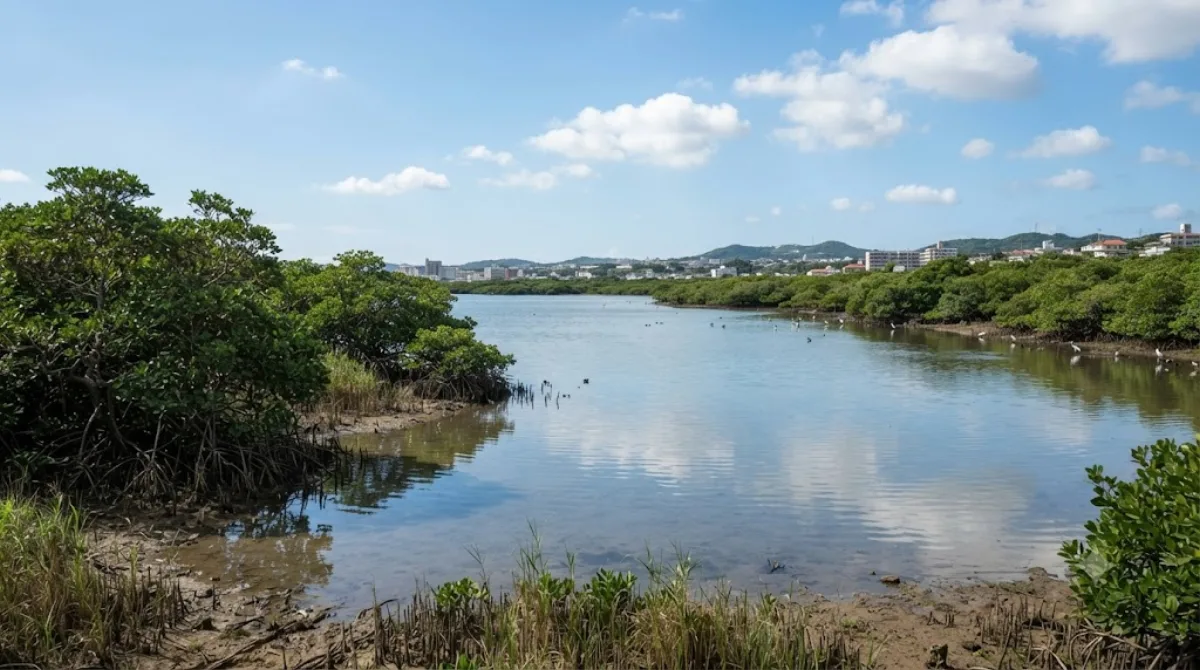
Wetlands between Naha and Tomigusuku
Lake Man is a small tidal wetland inside Manko Park, sitting on the boundary between Naha and Tomigusuku. Despite the name, it isn't a lake at all — it's a brackish, mangrove-fringed wetland covering about 0.11 square kilometres. People come here for birdwatching and a walk through mangrove habitat, which is unusual to find this close to central Naha. It's a quiet, natural counterpoint to the city sightseeing nearby, not a destination with facilities or attractions built around it.
Getting there
From central Naha, Lake Man is a short taxi or car ride, generally well under 20 minutes depending on where you start. There is no monorail (Yui Rail) stop right at the wetland, so public transport options are limited compared to sites along the monorail line — driving or taxi is the more practical way in.
How long to spend
An hour or so is enough for a walk along the park paths and some time watching birds. Bring binoculars if birdwatching is the main draw, since much of the wildlife is best seen from a distance.
When to go
Early morning or late afternoon tends to be better for spotting birds, as activity drops off in the heat of midday. As with most outdoor Okinawa sites, summer brings strong sun and humidity, so sun protection and water are worth carrying. This is not a heavily touristed spot, so crowding isn't a concern.
Combining with other sights
The Former Japanese Navy Underground Headquarters is the closest attraction at 1.4km and pairs well as a half-day combination — one natural, one historical. Gokoku-ji Temple (1.9km) and the Naha City Museum of History (2km) are both within easy reach if extending into an afternoon of sightseeing. Kokusai-dōri (2.2km), Naha's main shopping street, works well as a stop afterward for food and shopping once you're done outdoors.
Updated September 20, 2026 · Edited by the World by City editors
 GetYourGuide
 Klook
Klook
 Tiqets
 KKday
KKday
 WeGoTrip
 Booking.com
 Hotels.com