World by City

Museums & galleries

Galleria Borghese
Galleria Borghese

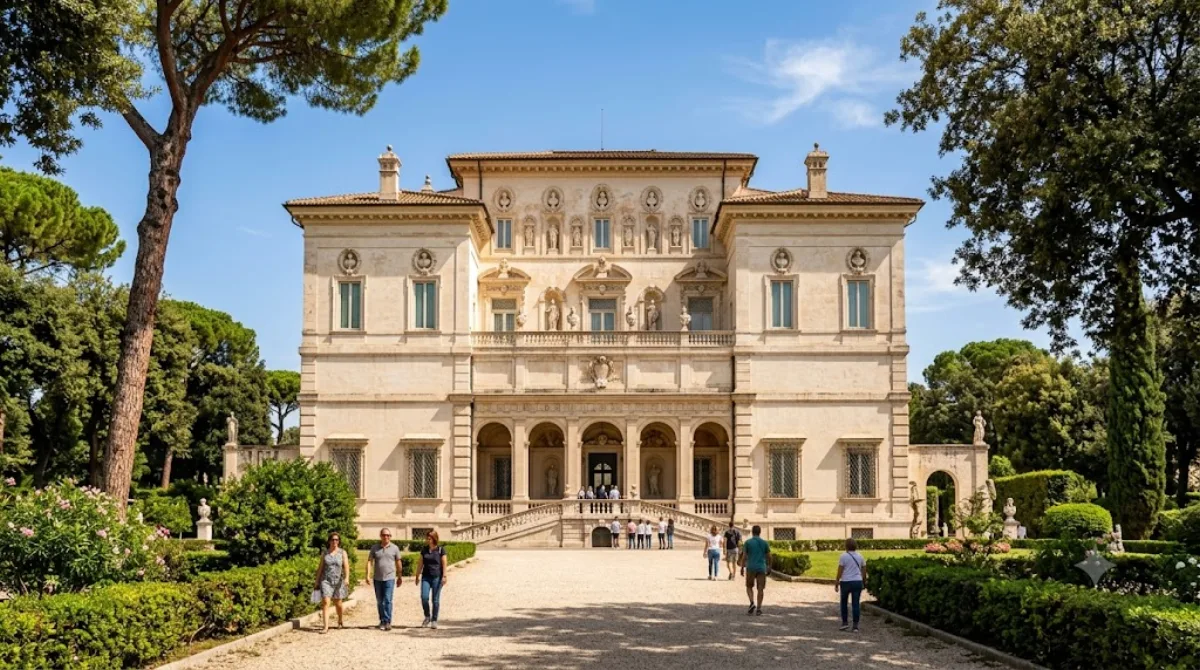
The Galleria Borghese or Borghese Gallery is an art gallery in Rome, Italy, housed in the former Villa Borghese Pinciana. At the outset, the gallery building was integrated with its gardens, but nowadays the Villa Borghese gardens are considered a separate tourist attraction. The Galleria Borghese houses a substantial part of the Borghese Collection of paintings, sculpture and antiquities, begun by Cardinal Scipione Borghese, the nephew of Pope Paul V. The building was constructed by the architect Flaminio Ponzio, developing sketches by Scipione Borghese himself, who used it as a villa suburba...

What it is

The Galleria Borghese occupies the former villa of Cardinal Scipione Borghese, built to display the art he collected in the early 1600s. The rooms hold works by Bernini and Caravaggio alongside Canova's sculpture of Pauline Bonaparte, all in the villa's original decorated halls rather than a converted museum building. It suits visitors interested in Baroque sculpture and painting shown in something close to its original setting.

Getting there

The gallery sits inside the Villa Borghese park, about a 25-30 minute walk from the historic centre, or a shorter taxi ride. It's also reachable by bus to the Pinciana or Veneto entrances of the park, followed by a walk through the gardens to the villa itself.

Time to allow

Visits are typically capped at around two hours per entry group, which is enough to see the collection's main rooms without rushing.

When to go

Entry is tightly limited and slots sell out well in advance, especially in spring and early autumn. Morning slots tend to be less crowded than midday. Because visits are timed, arriving late can mean losing part of your allotted period.

Combine it with

The surrounding Villa Borghese gardens are worth a walk before or after the visit. From there it's roughly 1.2km down to the Spanish Steps and Piazza di Spagna, and about 1.4km to Piazza del Popolo, all walkable in the same outing. The Mausoleum of Augustus is a little further at 1.6km.

Sources: open data from Wikipedia and OpenStreetMap · Updated August 5, 2026 · Edited by the World by City editors

Tickets & tours

Admission prices and opening hours change often, so we don't list them here. Check what's on sale and at what price below — booking ahead can cut the queue at some places.

This place may not appear in the results — some sites are free to enter or sell tickets only at the gate.

Stays near Galleria Borghese

Sorted by distance, walkable ones first. Distances are straight-line.

Map © OpenStreetMap contributors. Lines are straight connections, not actual routes.

Galleria Borghese Nearby stays

Locations and names come from OpenStreetMap. Check prices and availability on the booking sites.

Itineraries including this place

Good to visit alongside

Spanish Steps

Heritage & monuments

Spanish Steps

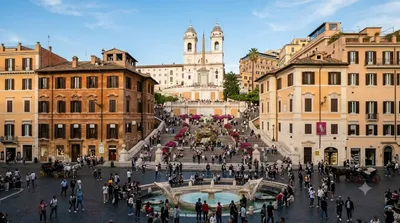
The Spanish Steps in Rome, Italy, climb a steep slope between the Piazza di Spagna at the base and the Piazza Trinità dei Monti, dominated by the Trinità dei Monti church, at the top.

1.2 km away

Piazza di Spagna

Parks & gardens

Piazza di Spagna

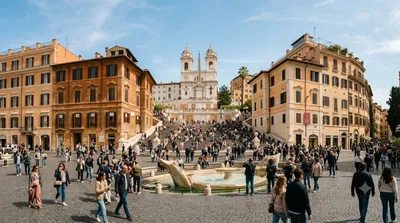
The Piazza di Spagna is a square in the centre of Rome, the capital of Italy. It lies at the foot of the Spanish Steps and owes its name to the Palazzo di Spagna, the seat of the Embassy of Spain to the Holy See. The Column of the Immaculate Conception is in the square.

1.2 km away

piazza del Popolo

Parks & gardens

piazza del Popolo

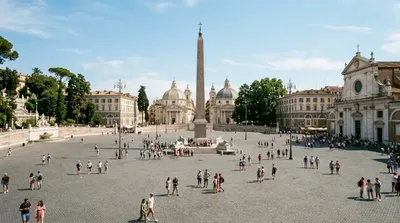
Piazza del Popolo is a large urban square in Rome. The name in modern Italian literally means "People's Square", but historically it derives from the poplars after which the church of Santa Maria del Popolo, in the northeast corner of the piazza, takes its name.

1.4 km away

Mausoleum of Augustus

Heritage & monuments

Mausoleum of Augustus

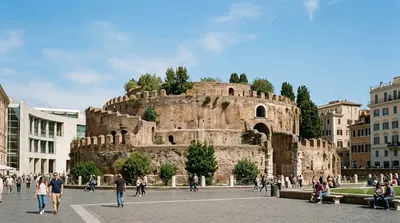
The Mausoleum of Augustus is a large tomb built by the Roman Emperor Augustus in 28 BC on the Campus Martius in Rome, Italy. The mausoleum is located on the Piazza Augusto Imperatore, near the corner with Via di Ripetta as it runs along the Tiber. The grounds cover an area equivalent to a few city blocks nestled between the church of San Carlo al Corso and the Museum of the Ara Pacis. After being closed for fourteen years for restoration work, the mausoleum was temporarily reopened to the public in March 2021. However, the mausoleum has been temporarily closed from June 2022 due to the renovat...

1.6 km away

Servian Wall

Heritage & monuments

Servian Wall

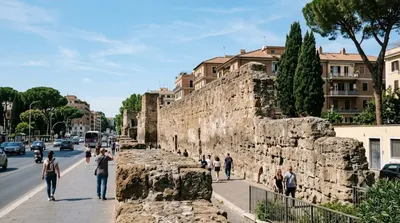
The Servian Wall is an ancient Roman defensive barrier constructed around the city of Rome in the early 4th century BC. The wall was built of volcanic tuff and was up to 10 m (33 ft) in height in places, 3.6 m (12 ft) wide at its base, 11 km (6.8 mi) long, and is believed to have had 16 main gates, of which only one or two have survived, and enclosed a total area of 246 hectares. In the 3rd century AD it was superseded by the construction of the larger Aurelian Walls as the city of Rome grew beyond the boundary of the Servian Wall.

1.6 km away

Ara Pacis

Museums & galleries

Ara Pacis

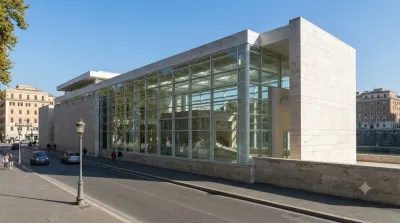
The Ara Pacis Augustae is an altar in Rome dedicated to the Pax Romana. The monument was commissioned by the Roman Senate on July 4, 13 BC to honour the return of Augustus to Rome after three years in Hispania and Gaul and consecrated on January 30, 9 BC. Originally located on the northern outskirts of Rome, a Roman mile from the boundary of the pomerium on the west side of the Via Flaminia, the Ara Pacis stood in the northeastern corner of the Campus Martius, the former flood plain of the Tiber River and gradually became buried under 4 metres (13 ft) of silt deposits. It was reassembled in it...

1.6 km away