World by City

Heritage & monuments

Servian Wall
Servian Wall

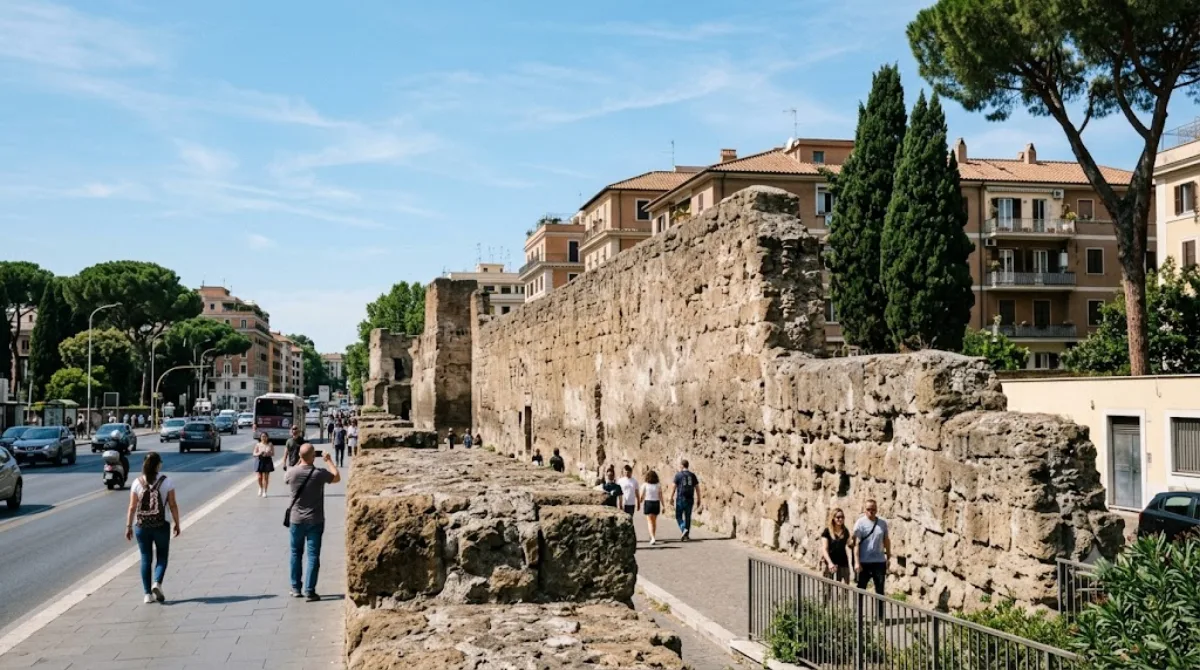
The Servian Wall is an ancient Roman defensive barrier constructed around the city of Rome in the early 4th century BC. The wall was built of volcanic tuff and was up to 10 m (33 ft) in height in places, 3.6 m (12 ft) wide at its base, 11 km (6.8 mi) long, and is believed to have had 16 main gates, of which only one or two have survived, and enclosed a total area of 246 hectares. In the 3rd century AD it was superseded by the construction of the larger Aurelian Walls as the city of Rome grew beyond the boundary of the Servian Wall.

Servian Wall

The Servian Wall was Rome's main defensive fortification, built from blocks of volcanic tuff in the early 4th century BC. It ran for roughly 11 km around the city, stood up to 10 m high in places, and enclosed about 246 hectares through a system of gates. By the 3rd century AD it had been superseded by the larger Aurelian Walls as Rome outgrew its original boundary. Little of the wall survives as a continuous structure today; instead, travellers encounter scattered fragments built into later buildings and streets. The most visible and well-known section stands in the open outside Roma Termini station, near Piazza dei Cinquecento, where a long stretch of the tuff blocks can be seen at street level.

Getting there

The Termini fragment is easy to reach since it sits directly beside Rome's main train and metro station. From the Colosseum or Roman Forum area, it's about a 20-25 minute walk, or a short ride on metro lines A or B to Termini.

How much time to allow

The wall is viewed from outside rather than entered, so ten to fifteen minutes is enough to take it in.

When to go

As an open-air ruin passed on the street rather than a ticketed monument, it doesn't get crowded. Daylight hours make the stonework easiest to see and photograph.

Combine it with

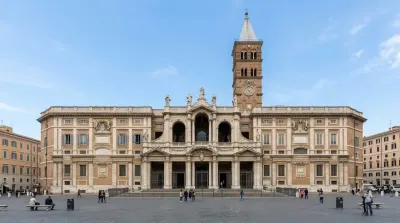
  • Basilica di Santa Maria Maggiore (0.5 km)
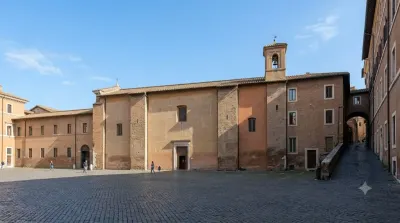
  • San Pietro in Vincoli (1.1 km)
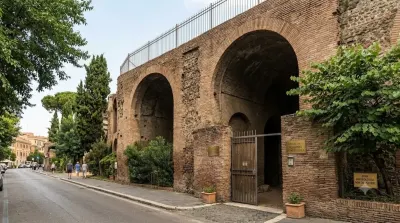
  • Domus Aurea (1.3 km)
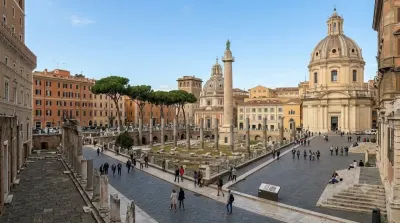
  • Trajan's Forum (1.5 km)

Sources: open data from Wikipedia and OpenStreetMap · Updated August 5, 2026 · Edited by the World by City editors

Tickets & tours

Admission prices and opening hours change often, so we don't list them here. Check what's on sale and at what price below — booking ahead can cut the queue at some places.

This place may not appear in the results — some sites are free to enter or sell tickets only at the gate.

Stays near Servian Wall

Sorted by distance, walkable ones first. Distances are straight-line.

Map © OpenStreetMap contributors. Lines are straight connections, not actual routes.

Servian Wall Nearby stays

Locations and names come from OpenStreetMap. Check prices and availability on the booking sites.

Good to visit alongside

Basilica di Santa Maria Maggiore

Temples & religious sites

Basilica di Santa Maria Maggiore

The Papal Basilica of Saint Mary the Great, also informally known as the Basilica of Saint Mary Major, is a Roman Catholic Papal Basilica and one of the Seven Pilgrim Churches of Rome. The largest Marian church in Rome, it is regarded as the first Marian sanctuary and the mothership of all Marian shrines. The shrine is dedicated to the Blessed Virgin Mary under the title of Our Lady of the Snow.

0.5 km away

San Pietro in Vincoli

Temples & religious sites

San Pietro in Vincoli

San Pietro in Vincoli is a Roman Catholic titular church and minor basilica in Rome, Italy. The church is on the Oppian Hill near Cavour metro station, a short distance from the Colosseum. The name alludes to the Biblical story of the Liberation of Peter.

1.1 km away

Domus Aurea

Museums & galleries

Domus Aurea

The Domus Aurea was a vast landscaped complex built by the Emperor Nero largely on the Oppian Hill in the heart of ancient Rome after the great fire in 64 AD had destroyed a large part of the city.

1.3 km away

Trajan's Forum

Parks & gardens

Trajan's Forum

Trajan's Forum was the last of the Imperial fora to be constructed in ancient Rome. The architect Apollodorus of Damascus oversaw its construction.

1.5 km away

Imperial fora

Heritage & monuments

Imperial fora

The Imperial Fora are a series of monumental fora, constructed in Rome over a period of one and a half centuries, between 46 BC and 113 AD. The fora were the center of the Roman Republic and of the Roman Empire.

1.6 km away

Trajan's Column

Heritage & monuments

Trajan's Column

Trajan's Column is a Roman triumphal column in Rome, Italy, that commemorates Roman emperor Trajan's victory in the Dacian Wars. It was probably constructed under the supervision of the architect Apollodorus of Damascus at the order of the Roman Senate. It is located in Trajan's Forum, north of the Roman Forum. Completed and dedicated on 12 May 113 AD, the freestanding column is most famous for its spiral bas relief, which depicts the wars between the Romans and Dacians. Its design has inspired numerous victory columns, both ancient and modern.

1.6 km away