
Siem Reap · Best time to visit
When Is the Best Time to Visit Siem Reap and Angkor?
August 29, 2026 · last updated · about 3 min read
Seasonal Overview: Weather, Crowds, and Conditions
Siem Reap has three distinct phases: dry and mild, hot, and the wet green season. Because touring temples requires hours outdoors on stone terraces, seasonal climate directly affects your trip.
Dry and Mild Season (November to February)
This is the most comfortable period for exploring Angkor Wat, Bayon, and Ta Prohm. Rainfall is rare and humidity is manageable, but visitor crowds peak. Flights into Siem Reap–Angkor International Airport (SAI) run full, so reserve transport into town and temple drivers in advance.
Hot Season (March to May)
Temperatures spike, making midday visits exhausting. Tour at dawn and late afternoon instead. Mid-April brings Khmer New Year, drawing heavy domestic travel, energetic water festivities, and higher demand for central lodging.
Wet and Green Season (June to October)
Monsoon downpours usually arrive in short afternoon bursts. Crowds thin significantly, moss carpets the ruins, and temple moats fill. This is also the premier time for Tonlé Sap, as high water levels allow boat passage to stilted villages.
Which Months Suit Your Trip
- Comfortable walking: December and January offer the coolest days and clearest sunrises.
- Quiet visits and photography: July to September feature lush foliage, reflective pools, and few crowds.
- Challenging period: April and May, due to relentless heat radiating off stone monuments.
What to Pack and Prepare
Temples enforce strict dress rules: shoulders and knees must be covered. Wear loose linen trousers and breathable tops. Pack sturdy shoes with grip for slick sandstone steps, high-SPF sun protection, and insect repellent.
Pick your dates — we'll search Siem Reap hotels for you
Choose dates and guests, and the buttons below will open search results with your criteria. Prices differ between sites, so compare before you book.
 View on Booking.com
 View on Hotels.com
Things to see in Siem Reap
See all →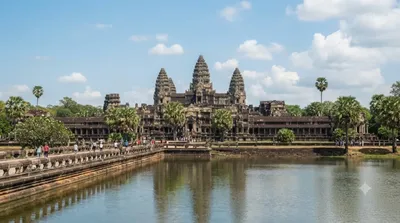
Temples & religious sites
Angkor Wat
A temple of the former Khmer Empire located in Siem Reap, Cambodia, built in the early 12th century under Suryavarman II. With both Hindu and Buddhist elements preserved together, it stands as one of Cambodia's foremost attractions.
Heritage & monuments
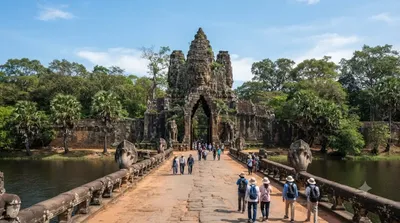
Angkor Thom
This was the last capital of the Khmer Empire, built in the late 12th century under Jayavarman VII. Its grand gates and ruins let visitors trace the legacy of the ancient empire.
Temples & religious sites
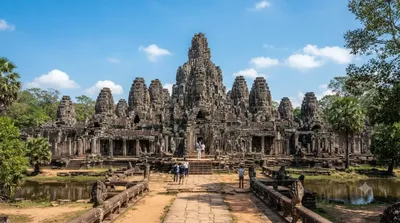
Bayon
The Bayon is a Khmer temple at the heart of Angkor Thom in Cambodia, built in the late 12th century on the order of Jayavarman VII. Once regarded as the foremost temple of the Khmer Empire, it exudes grandeur at every turn.
Temples & religious sites
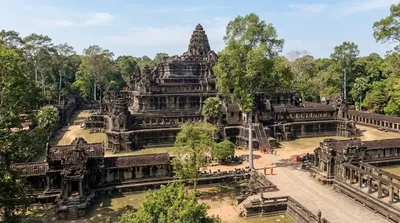
Baphuon
Baphuon is a three-tiered temple mountain located inside Angkor Thom, northwest of the Bayon. Built in the mid-11th century to honor Shiva, it showcases distinctive arched architecture.
More Siem Reap guides
Best value
Where to Stay in Siem Reap for the Best Value
5-star & luxury
Where to stay in Siem Reap for a 5-star luxury experience
Pool villas & resorts
Where to Stay in Siem Reap for Pool Villas and Resorts
Family travel
Where to Stay in Siem Reap for a Family Trip
Couples & honeymoon
Where to stay in Siem Reap for a honeymoon or couples trip
Central & near stations
Where to stay in Siem Reap for central transit and bus connections
First-time guide
How to Plan Your First Trip to Siem Reap: Layout, Transport, and Temples
Getting around
How to get around Siem Reap: tuk-tuks, temple drivers, and airport transfers
Best time to visit guides for other destinations
Guantánamo
When is the best time to visit Guantánamo, Cuba?
Cetinje
The Best Time to Visit Cetinje: Weather, Crowds, and Season Guide
North Nicosia
When to Visit North Nicosia: Weather, Seasons, and Practical Advice
Banja Luka
The Best Time to Visit Banja Luka for Good Weather and Outdoor Activities