
Siem Reap · First-time guide
How to Plan Your First Trip to Siem Reap: Layout, Transport, and Temples
August 29, 2026 · last updated · about 3 min read
Understanding the City Layout
Siem Reap is split by the Siem Reap River, which flows south toward Tonlé Sap. The west bank features the Old Market (Psar Chaa) and Pub Street, the liveliest hub for dining and foot traffic. Across the river to the east, Wat Bo offers a quieter pocket of cafes. Heading directly north along Charles de Gaulle leads into the Angkor Archaeological Park.
Arriving and Getting Around
Flights land at Siem Reap-Angkor International Airport (SAI), located well east of the city. Expect an hour-long transfer via official airport shuttles, minivans, or arranged taxis.
Downtown is compact enough to walk, while three-wheeled remorks (tuk-tuks) cover longer trips. Local ride-hailing apps provide straightforward fares. For touring Angkor, hiring a dedicated remork driver for the full day is standard and provides shaded travel between temples.
What First-Timers Get Wrong
- Midday temple burnout: Pushing through noon heat drains energy. Start at dawn, rest in town during peak heat, and resume in late afternoon.
- Dress code missteps: Shoulders and knees must be covered by clothing. Loose shawls over sleeveless tops are rejected at Angkor Wat checkpoints.
- Airport distance: SAI sits far outside town; factor in highway driving time for flights.
Sensible First-Trip Itinerary
Spend day one on the Small Circuit: sunrise at Angkor Wat, the stone faces of Bayon, and jungle-gripped Ta Prohm. On day two, visit Grand Circuit highlights like Preah Khan or the pink sandstone of Banteay Srei. Save Tonlé Sap boat trips and remote jungle ruins for future visits.
Pick your dates — we'll search Siem Reap hotels for you
Choose dates and guests, and the buttons below will open search results with your criteria. Prices differ between sites, so compare before you book.
 View on Booking.com
 View on Hotels.com
Things to see in Siem Reap
See all →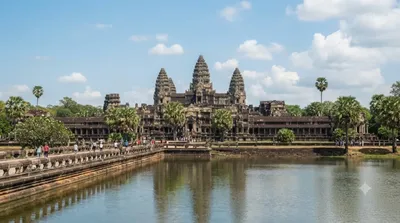
Temples & religious sites
Angkor Wat
A temple of the former Khmer Empire located in Siem Reap, Cambodia, built in the early 12th century under Suryavarman II. With both Hindu and Buddhist elements preserved together, it stands as one of Cambodia's foremost attractions.
Heritage & monuments
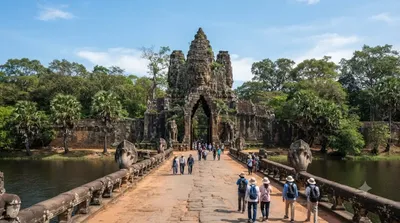
Angkor Thom
This was the last capital of the Khmer Empire, built in the late 12th century under Jayavarman VII. Its grand gates and ruins let visitors trace the legacy of the ancient empire.
Temples & religious sites
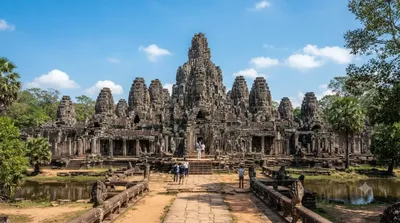
Bayon
The Bayon is a Khmer temple at the heart of Angkor Thom in Cambodia, built in the late 12th century on the order of Jayavarman VII. Once regarded as the foremost temple of the Khmer Empire, it exudes grandeur at every turn.
Temples & religious sites
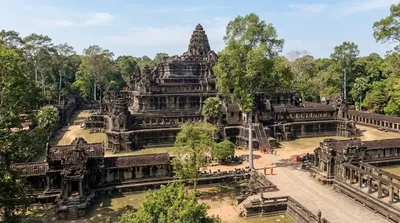
Baphuon
Baphuon is a three-tiered temple mountain located inside Angkor Thom, northwest of the Bayon. Built in the mid-11th century to honor Shiva, it showcases distinctive arched architecture.
More Siem Reap guides
Best value
Where to Stay in Siem Reap for the Best Value
5-star & luxury
Where to stay in Siem Reap for a 5-star luxury experience
Pool villas & resorts
Where to Stay in Siem Reap for Pool Villas and Resorts
Family travel
Where to Stay in Siem Reap for a Family Trip
Couples & honeymoon
Where to stay in Siem Reap for a honeymoon or couples trip
Central & near stations
Where to stay in Siem Reap for central transit and bus connections
Best time to visit
When Is the Best Time to Visit Siem Reap and Angkor?
Getting around
How to get around Siem Reap: tuk-tuks, temple drivers, and airport transfers
First-time guide guides for other destinations
Guantánamo
First-Timer Guide to Guantánamo, Cuba: Layout, Transport, and Practical Tips
Cetinje
How to Plan Your First Trip to Cetinje: Layout, Transport, and Key Sights
North Nicosia
First-timer's guide to visiting North Nicosia: borders, layout, and transit
Cienfuegos
First-Timer Guide to Cienfuegos: Layout, Transport, and Practical Tips