
Heritage & monuments
Villa of the Papyri
What it is
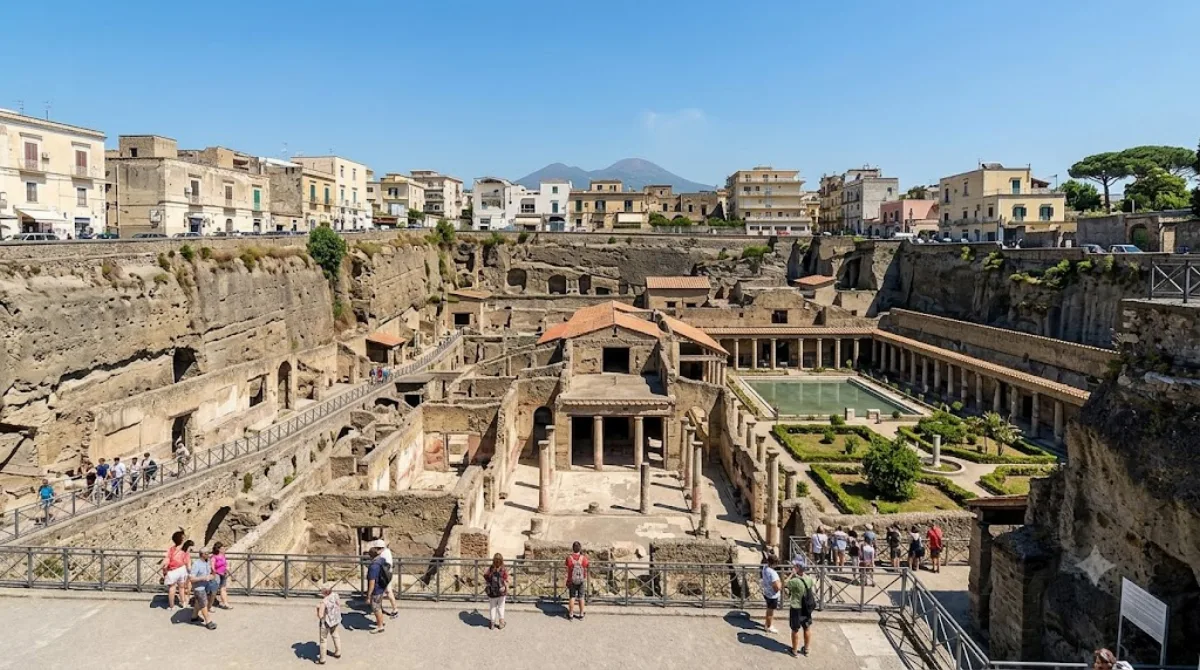
The Villa of the Papyri was a private Roman seaside villa buried by the 79 AD eruption of Vesuvius, part of the same site as Herculaneum. Excavated by tunnel in the 18th century, it yielded the only intact library of papyrus scrolls to survive antiquity, along with an unusually large group of bronze and marble statues. Most of that material now sits in the Naples Archaeological Museum, and the original underground rooms are only partly accessible, so this is a stop for people interested in what was found here rather than a full walk-through villa. It's also the model for the Getty Villa in California, which some visitors already know.
Getting there
From central Naples, the Circumvesuviana train to Ercolano Scavi takes around 20 minutes, followed by a short walk downhill to the Herculaneum site entrance.
Time to allow
Given the limited excavated area, an hour is usually enough on top of a visit to the rest of Herculaneum.
When to go
Mornings are quieter and cooler for walking the site; midday sun can be uncomfortable with little shade.
Combine it with
The Palace of Portici is just 0.6km away and pairs naturally with a visit here. Central Naples sights like Mercato, Santa Maria del Carmine, and Castel Nuovo are 7-9km off and better suited to a separate day back in the city.
Updated September 20, 2026 · Edited by the World by City editors
 GetYourGuide
 Klook
Klook
 Tiqets
 KKday
KKday
 WeGoTrip
 Booking.com
 Hotels.com