
Denkmäler & Ausgrabungen
Villa dei Papiri
Villa of the Papyri
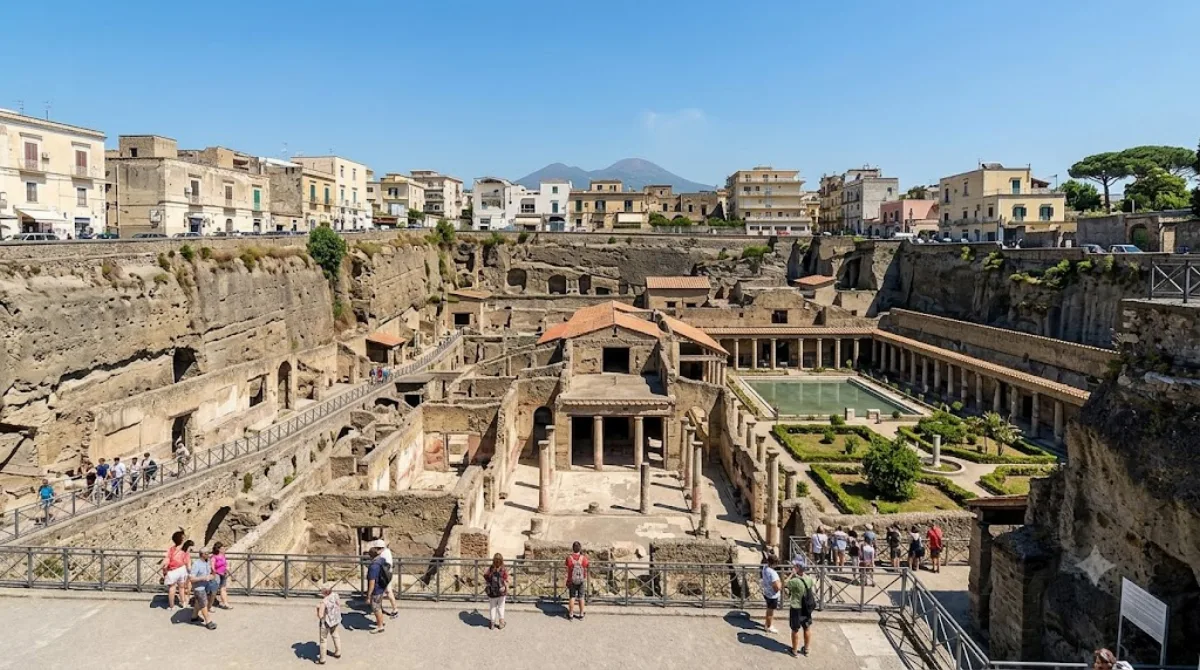
Die Villa dei Papiri
Die Villa dei Papiri ist ein antikes römisches Herrenhaus in Herculaneum. Sie ist vor allem für ihre im Jahr 1750 entdeckte Bibliothek aus Papyrusrollen bekannt. Besucher interessieren sich für diesen Ort aufgrund der umfangreichen Funde an Fresken sowie bronzenen und marmornen Skulpturen, die eine der größten Sammlungen griechischer und römischer Kunst an einem einzigen Fundort darstellen.
Anreise und Zeitplanung
Die Anlage befindet sich in Ercolano, einem Vorort von Neapel. Vom Stadtzentrum aus ist sie am einfachsten mit dem Regionalzug (Circumvesuviana) zu erreichen. Die Fahrtzeit beträgt je nach Startpunkt im Zentrum etwa 20 bis 30 Minuten.
Für den Besuch der Ausgrabungen und die Villa und der umliegenden Bereiche von Herculaneum sollte man etwa 2 bis 4 Stunden einplanen.
Besucherinformationen
Die beste Reisezeit ist das Frühjahr oder der Herbst, da die Anlage im Sommer sehr heiß werden kann. In der Hochsaison ist mit einem hohen Besucheraufkommen zu rechnen, weshalb ein Besuch in den frühen Morgenstunden ratsam ist, um Menschenmengen zu vermeiden.
Kombinationsmöglichkeiten
Aufgrund der Lage lassen sich weitere Sehenswürdigkeiten in die Route integrieren:
- Palazzo di Portici (0,6 km): In unmittelbarer Nähe gelegen.
- Mercato (7,7 km): Ein lokaler Markt in Richtung Neapel.
- Santa Maria del Carmine (7,9 km): Eine bedeutende Kirche im Stadtgebiet.
- Castel Nuovo (8,5 km): Die historische Festung im Zentrum von Neapel.
Aktualisiert 20. September 2026 · Redaktion die World by City-Redaktion
 GetYourGuide
 Klook
Klook
 Tiqets
 KKday
KKday
 WeGoTrip
 Booking.com
 Hotels.com