Temples & religious sites
Masjid Sultan
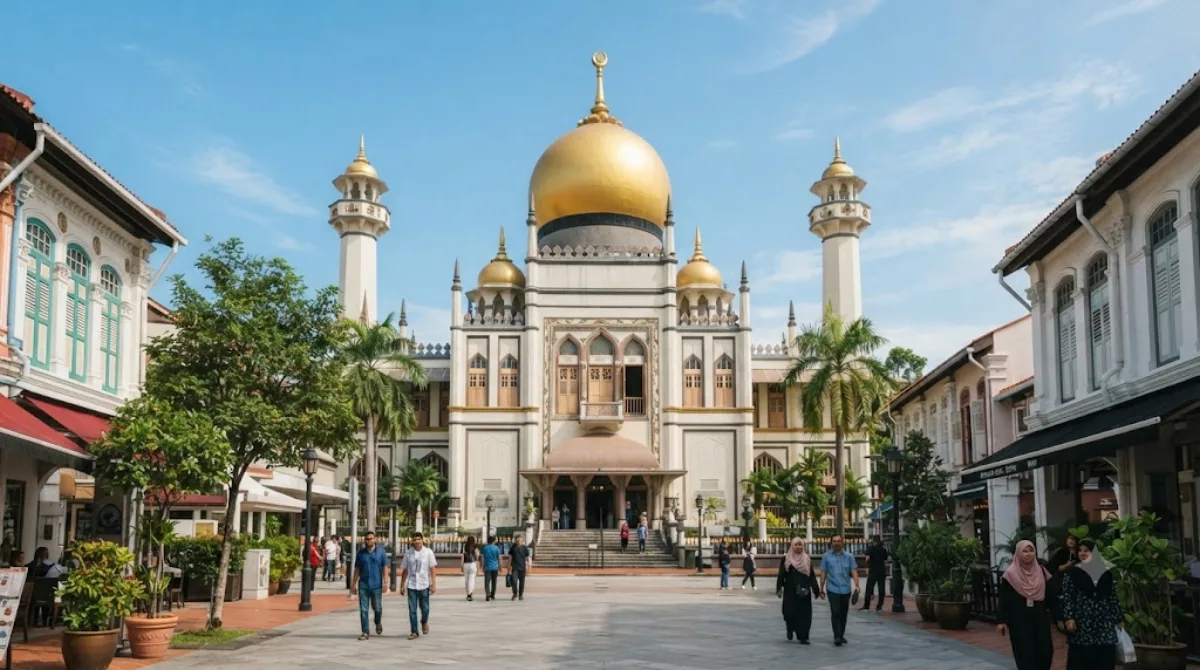
Sultan Mosque
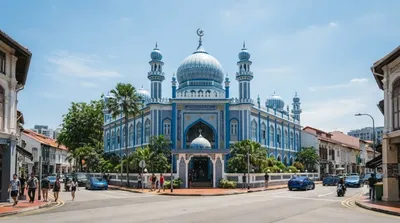
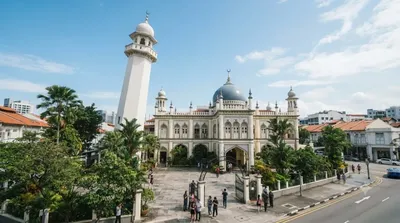
Sultan Mosque is the best-known mosque in Singapore and a national monument, standing at the heart of Kampong Glam. Its golden domes and the current building, completed in 1932, replaced an earlier 1826 mosque and are named for Sultan Hussein Shah of Johor, one of the figures involved in Singapore's founding. It remains an active place of worship, so it's worth visiting as much for the surrounding Kampong Glam streets - Arab Street's textile shops, cafes and murals - as for the building itself.
Getting there
From the city centre (the Marina Bay / Orchard Road area), it's around a 15-20 minute taxi or rideshare ride depending on traffic. By public transport, take the MRT to Bugis station and walk about 10 minutes through Kampong Glam, or to Nicoll Highway station for a similar walk from the other direction.
How much time to allow
Seeing the mosque exterior and courtyard takes 15-20 minutes. Most travellers spend an hour or two in the area overall, combining the mosque with a walk through the surrounding lanes and shops.
When to go
As an active mosque, it can be busy around prayer times, particularly on Fridays. Visitors should dress modestly, and non-worshippers should expect areas to be off-limits or quieter during prayers. Mornings and weekday afternoons tend to be calmer for photos of the exterior.
Combine with
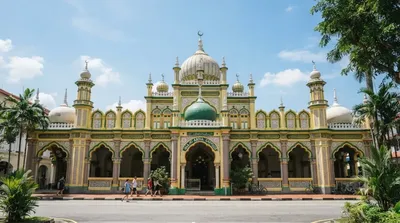
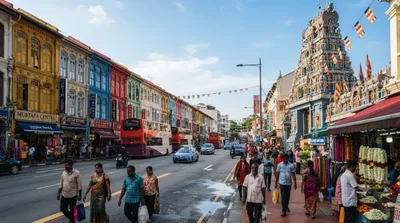
Several other mosques sit within easy walking distance: Masjid Malabar (0.4km), known for its blue-tiled facade, Masjid Hajjah Fatimah (0.5km), and Masjid Abdul Gaffoor (0.6km), notable for its sundial motif. Little India is about 1km away and can be combined into a longer walking route covering both ethnic districts.
Updated September 20, 2026 · Edited by the World by City editors
 GetYourGuide
 Klook
Klook
 Tiqets
 KKday
KKday
 WeGoTrip
 Booking.com
 Hotels.com