
Washington, D.C. · First-time guide
How to plan your first visit to Washington, D.C.
August 29, 2026 · last updated · about 4 min read
Understanding the City Layout
Washington, D.C. is a planned city organized by a grid system overlaid with diagonal avenues. To navigate it, think of the city in three primary zones:
- The National Mall: The central axis containing the Capitol, the Washington Monument, and the Lincoln Memorial. This is the primary sightseeing hub.
- Downtown/K Street: The commercial and political core, characterized by office buildings and government agencies.
- The Neighborhoods: Areas like Georgetown (historic waterfront), Adams Morgan (dining/nightlife), and Capitol Hill (residential/government).
Arrival and Transportation
Most international visitors arrive via Washington Dulles International Airport (IAD). To reach the city center, the Silver Line of the Metrorail provides a direct rail link, though ride-share services and airport shuttles are also available.
Once inside the city, the Metrorail is the most efficient way to move between districts. For shorter distances within the National Mall area, walking is the only viable option as the scale of the monuments is larger than it appears on maps. The DC Circulator bus is a useful, low-cost alternative for specific tourist loops.
Common First-Timer Mistakes
- Underestimating Distances: Many visitors assume the Mall is a short walk. In reality, walking from the Capitol to the Lincoln Memorial is several miles. Use the Metro or a bike-share to bridge the gaps.
- Ignoring Timed Entries: Some major museums and monuments require advance timed-entry passes. Do not assume you can walk in without checking official government websites first.
- Overlooking the Neighborhoods: Spending the entire trip on the Mall can feel sterile. Balance your itinerary with a visit to Georgetown or the Wharf for a more local atmosphere.
A Sensible First-Trip Itinerary
Prioritize your time based on the city's layout to avoid burnout:
Essential First Stops
- The Smithsonian Museums: Focus on one or two (such as the Air and Space or Natural History museums) rather than trying to see them all.
- The Capitol and Library of Congress: The architectural and political heart of the city.
- The Memorials: The Lincoln and Vietnam Veterans Memorials are essential for first-timers.
What Can Wait
Unless you have a specific interest in niche diplomacy or deep archival research, secondary government agencies and smaller, specialized museums can be saved for a second visit.
Pick your dates — we'll search Washington, D.C. hotels for you
Choose dates and guests, and the buttons below will open search results with your criteria. Prices differ between sites, so compare before you book.
 View on Booking.com
 View on Hotels.com
Things to see in Washington, D.C.
See all →
Castles & palaces
White House
The official office and residence of the U.S. president, located in the heart of Washington, D.C. Every president since 1800 has lived and worked here, overseeing state affairs and receiving foreign dignitaries.

Heritage & monuments
Washington Monument
A monument on the National Mall in Washington, D.C., standing 170 meters tall. From the observation deck at 153 meters, visitors can take in a sweeping view of the city.
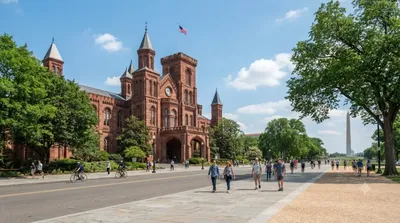
Museums & galleries
Smithsonian Institution
The Smithsonian Institution is a cultural institution in Washington, D.C., founded in 1846 with a bequest from James Smithson. It encompasses numerous museums, galleries, and libraries, offering a wide range of exhibits to explore.
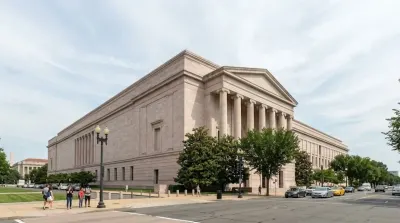
Museums & galleries
National Gallery of Art
The National Gallery of Art is a museum in Washington, D.C. that opened in 1941 with a collection donated by private collectors including Andrew Mellon. It's a favorite among art lovers for its wide range of masterpieces.
More Washington, D.C. guides
Best value
Where to stay in Washington, D.C. for the best value
5-star & luxury
Where to stay for a luxury experience in Washington, D.C.
Pool villas & resorts
Where to find pool villas and resorts in Washington, D.C. and surrounding areas
Family travel
Where to stay in Washington, D.C. for a family trip
Couples & honeymoon
Where to stay in Washington, D.C. for couples and honeymooners
Central & near stations
Where to stay in Washington, D.C. for central access and transit
Best time to visit
When is the best time to visit Washington, D.C.?
Getting around
How to get around Washington, D.C.
First-time guide guides for other destinations
Guantánamo
First-Timer Guide to Guantánamo, Cuba: Layout, Transport, and Practical Tips
Cetinje
How to Plan Your First Trip to Cetinje: Layout, Transport, and Key Sights
North Nicosia
First-timer's guide to visiting North Nicosia: borders, layout, and transit
Cienfuegos
First-Timer Guide to Cienfuegos: Layout, Transport, and Practical Tips