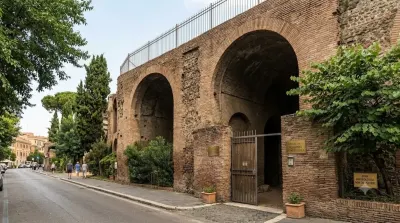
Denkmäler & Ausgrabungen
Konstantinsbogen
Arch of Constantine
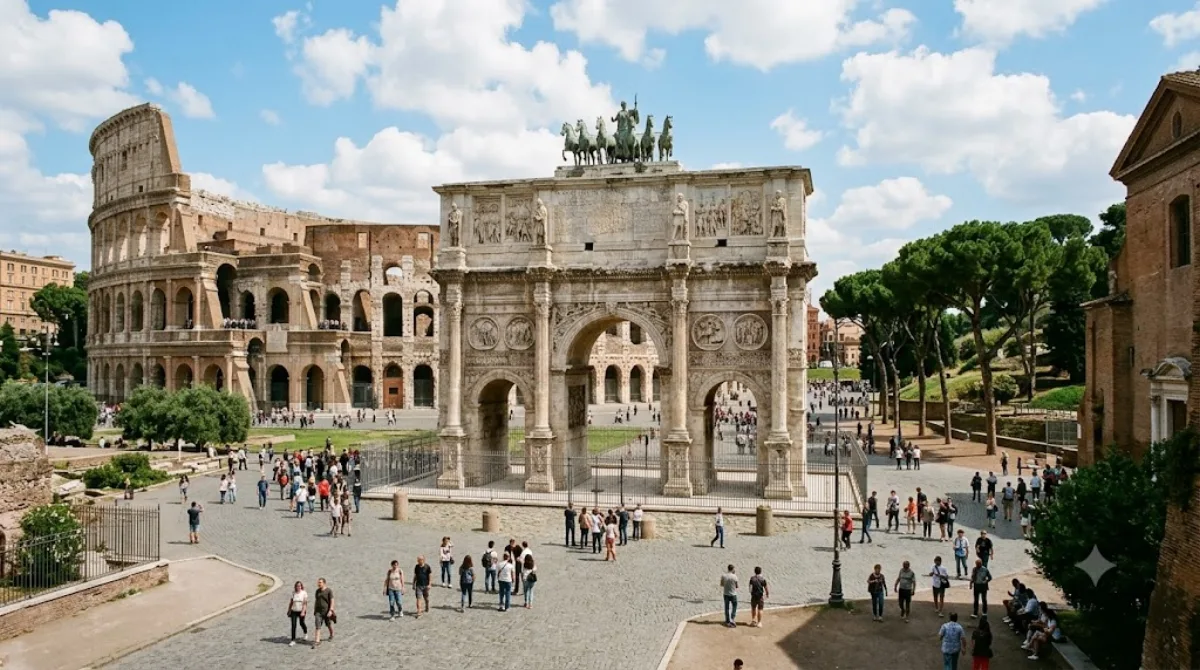
Der Konstantinsbogen
Der Konstantinsbogen ist ein römischer Triumphbogen, der vom Senat errichtet wurde, um den Sieg Kaiser Konstantins in der Schlacht an der Milvischen Brücke im Jahr 312 n. Chr. zu feiern. Er befindet sich zwischen dem Kolosseum und dem Palatin und ist der größte erhaltene Triumphbogen in Rom. Besucher kommen hierher, um die monumentale Architektur und die integrierten Reliefs aus verschiedenen Epochen des Römischen Reiches zu betrachten.
Anreise und Zeitaufwand
Das Denkmal liegt zentral im historischen Bereich Roms. Vom Stadtzentrum aus ist es je nach Startpunkt in etwa 15 bis 30 Minuten zu Fuß oder mit den öffentlichen Verkehrsmitteln erreichbar. Da das Bauwerk im öffentlichen Raum steht und von außen besichtigt wird, sollten Besucher etwa 30 bis 60 Minuten einplanen, um die Details der Reliefs und Inschriften zu studieren.
Besuchszeit und Hinweise
Der Bereich um den Bogen ist ganzjährig zugänglich. Aufgrund der unmittelbaren Nähe zum Kolosseum ist es hier zu jeder Tageszeit sehr stark besucht. Um größere Menschenmengen zu vermeiden, empfiehlt sich ein Besuch in den frühen Morgenstunden.
Kombinationsmöglichkeiten
Aufgrund der zentralen Lage lässt sich der Besuch mit anderen nahegelegenen Sehenswürdigkeiten verbinden:
- Palatin-Hügel: 0,3 km entfernt
- Titusbogen: 0,2 km entfernt
- Vestatempel: 0,4 km entfernt
- Domus Aurea: 0,4 km entfernt
Aktualisiert 20. September 2026 · Redaktion die World by City-Redaktion
 GetYourGuide
 Klook
Klook
 Tiqets
 KKday
KKday
 WeGoTrip
 Booking.com
 Hotels.com