Heritage & monuments
The Great Sphinx
What you're looking at
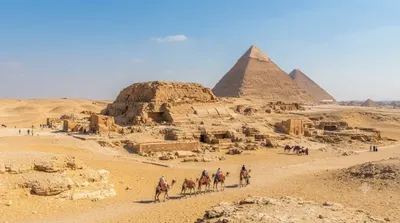
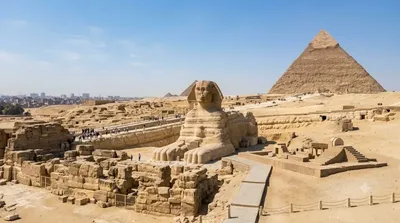
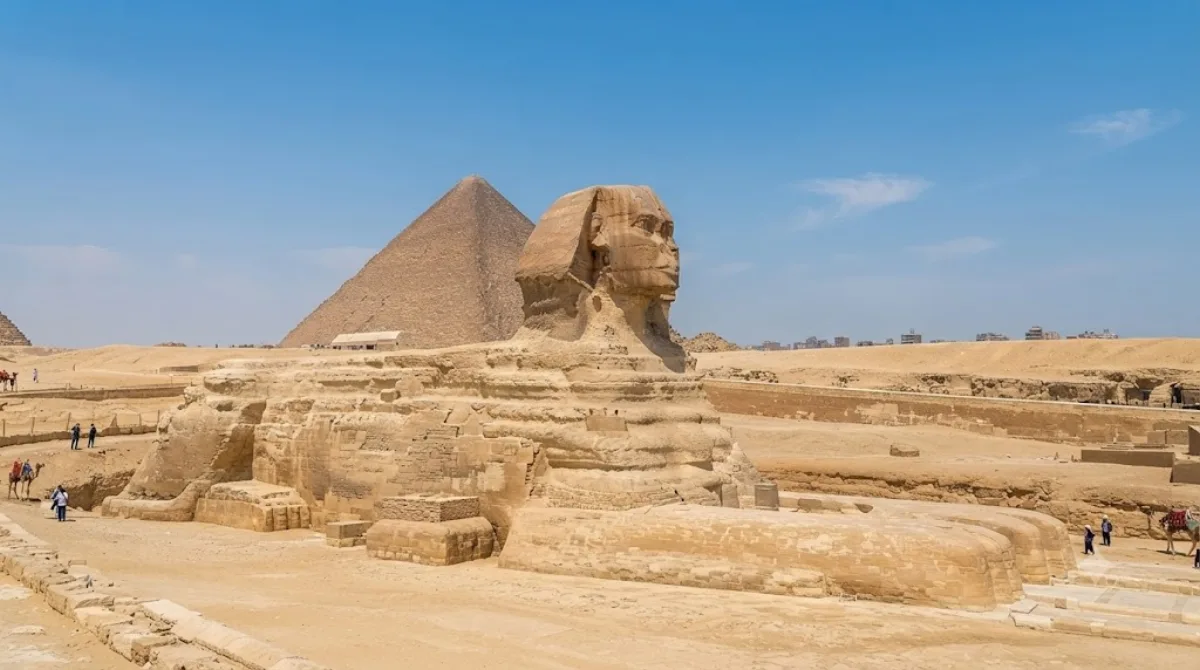
Carved from a single limestone outcrop on the Giza Plateau, the Great Sphinx has the body of a lion and a human head, and is generally considered the oldest large-scale statue in Egypt. Most visitors come to see it in the same visit as the pyramids, taking in the famous view of the Sphinx with the Great Pyramid rising behind it. Up close, the statue is smaller than photos suggest, and centuries of erosion and past restoration work are visible on the stone.
Getting there
From central Cairo, a taxi or ride-hailing car to the Giza Plateau takes roughly 30–45 minutes depending on traffic. The Sphinx sits at the eastern edge of the plateau, within walking distance of the main pyramid complex, so most people arrive as part of the same trip. If you're flying in, Cairo International Airport (CAI) is about 45 minutes to an hour from Giza by car, again depending on traffic.
How much time to allow
Seeing the Sphinx itself, including the viewing terrace in front of it, takes about 20–30 minutes. Most visitors combine it with the wider Giza Plateau, which takes a half day or more.
When to go
Early morning is quieter and cooler, which matters given how exposed the site is to sun with little shade. The plateau gets busy with tour groups by mid-morning, especially around the main viewing points near the Sphinx. Midday sun in the warmer months can be intense, so factor that into how long you're comfortable standing outside.
Combine it with
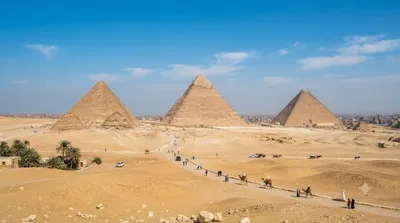
- Giza Plateau (0.5km) — the broader site the Sphinx sits within, worth exploring beyond just this one statue
- Pyramid of Khentkaus I (0.3km) — a short walk away, easy to add without much extra time
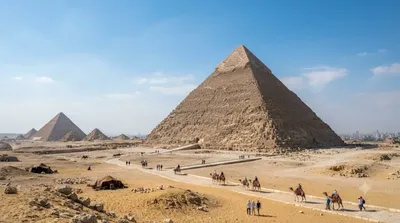
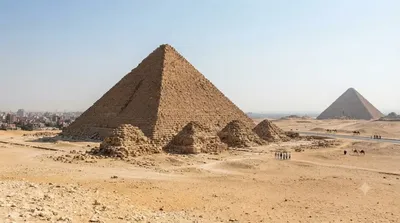
- Great Pyramid of Giza (0.5km) — the classic pairing, often photographed together with the Sphinx
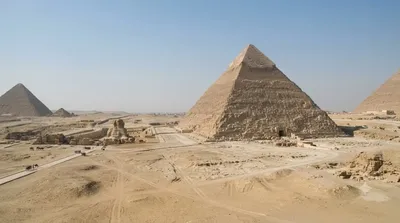
- Pyramid of Khafre (0.7km) — the pyramid most directly aligned with the Sphinx's gaze
Updated September 8, 2026 · Edited by the World by City editors
 GetYourGuide
 Klook
Klook
 Tiqets
 KKday
KKday
 WeGoTrip
 Booking.com
 Hotels.com