
Florence · 5-star & luxury
Which area of Florence is best for a 5-star or luxury hotel stay?
August 2, 2026 · last updated · about 4 min read
Where to Stay in Florence for a 5-Star or Luxury Trip
Florence's centre is a UNESCO site of low buildings and narrow streets, so luxury stays are usually converted palazzi, not towers. It's walkable end to end in under 20 minutes, so area choice is mostly about view and noise, not distance to sights.
Centro Storico: Duomo and Piazza della Signoria
The densest concentration of sights, including the Duomo and Uffizi. Palazzo hotels here keep frescoed ceilings and courtyards. Streets are pedestrian-heavy and loud with bells and foot traffic; ask for a courtyard or upper-floor room if quiet matters.
Lungarno: along the Arno
Properties facing the river, especially near Ponte Vecchio, offer water views and put both the Uffizi side and Oltrarno (Palazzo Pitti, Boboli Gardens) within walking distance. A non-river-facing room loses most of the appeal, so confirm the exact view.
Via de' Tornabuoni and Piazza della Repubblica
Florence's main luxury shopping street, with several historic hotels on it. Suits travelers wanting shopping and dining near the Duomo, though street noise is common.
The hills: Fiesole, Bellosguardo, San Domenico
A smaller set of villa properties offer gardens, pools, and skyline views centre-city buildings can't fit. Each trip into town needs a taxi, suiting travelers who value quiet over walkable access.
What to Check Before Booking
- Historic palazzi can lack full elevator access; ask if mobility matters.
- Confirm the actual view (river, courtyard, street), not just the category name.
- FLR is near the centre by taxi or tram T2; PSA needs a train to Firenze S.M.N., about 1 hour.
When to Visit and Availability
Spring and early autumn bring the heaviest demand, alongside fashion and art events. Midsummer adds heat to the crowds. Winter, aside from Christmas, offers the most availability for upgrades or view requests.
Pick your dates — we'll search Florence hotels for you
Choose dates and guests, and the buttons below will open search results with your criteria. Prices differ between sites, so compare before you book.
 View on Booking.com
 View on Hotels.com
Things to see in Florence
See all →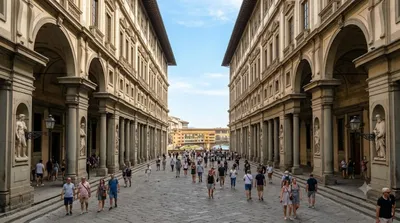
Museums & galleries
Uffizi Gallery
The Uffizi Gallery, located near Piazza della Signoria in Florence, is renowned for its collection of Italian Renaissance paintings. With works by Botticelli, Leonardo da Vinci, Michelangelo, and Raphael all under one roof, it's an ideal stop for travelers wanting to trace the development of Renaissance art firsthand.
Museums & galleries
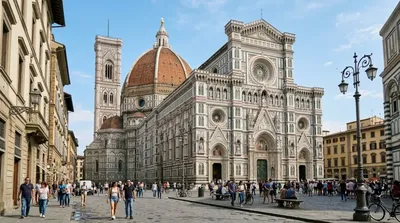
Florence Cathedral
Florence Cathedral, or Santa Maria del Fiore, is the city's archiepiscopal cathedral, begun in 1296 to a Gothic design by Arnolfo di Cambio and completed in 1436 with Filippo Brunelleschi's dome. The exterior is faced with white marble panels alternating with green and pink marble, and the facade is a 19th-century Gothic Revival design by Emilio De Fabris.

Museums & galleries
Palazzo Pitti
The Pitti Palace is a vast Renaissance palace south of the Arno River, not far from the Ponte Vecchio. It was built in 1458 as the residence of Florentine banker Luca Pitti and was greatly enlarged after passing into the hands of the Medici family.
Views & landmarks
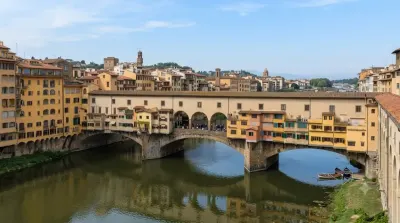
Ponte Vecchio
The Ponte Vecchio is a medieval stone bridge over the Arno River, distinctive for the shops lining both sides of its span. Butchers, tanners, and greengrocers once occupied the bridge, but today it houses jewelers selling gold and gems, art galleries, and souvenir shops. It was also the only bridge in Florence to survive the destruction of World War II.
More Florence guides
Best value
Where should I stay in Florence for the best value?
Pool villas & resorts
Where to Stay in Florence for a Pool Villa or Resort
Family travel
Where to Stay in Florence with Kids: A Guide to Family-Friendly Neighborhoods
Couples & honeymoon
Where should couples stay in Florence for a honeymoon trip?
Central & near stations
Where to stay in Florence near Santa Maria Novella and the historic centre
Best time to visit
When Is the Best Time to Visit Florence?
First-time guide
How to plan your first trip to Florence, Italy
Getting around
How to get around Florence, Italy: walking, trams, and day-trip trains