
Florence · Pool villas & resorts
Where to Stay in Florence for a Pool Villa or Resort
August 2, 2026 · last updated · about 4 min read
Choosing a Base for a Pool Villa Near Florence
Florence's centre is dense and built for walking, not for pools — private outdoor pools are rarely part of centre hotels, since there's no space for them. Pool villas and resorts sit outside the old walls, in the surrounding hills and countryside, so the real choice is how far to move from the sights and how much driving that adds.
Fiesole and the northern hills
A short drive or bus ride above Florence, with views over the Arno valley. Villas and small resorts here keep the city genuinely close, good for pool time in the afternoon and museums in the morning without a long transfer.
Chianti countryside (Greve, San Casciano, Impruneta)
South of the city, the Chianti hills hold the largest concentration of pool villas and rural resorts, among vineyards and olive groves. This suits travellers treating Florence as one stop in a wider Tuscany trip, since the centre becomes a drive rather than a walk from here.
Getting There and Around
Florence has no metro, and the centre is walkable, but none of these villa areas connect to it by rail. Florence airport (FLR) is roughly 20 minutes from the centre; Pisa airport (PSA) covers more low-cost routes but adds over an hour of driving. A rental car is effectively required for villa stays, since buses rarely reach rural properties.
What to Check Before Booking
- Whether the pool is heated, since many countryside pools run only through the warmer months.
- Private versus shared pool, and how many guests use it if the property is a resort.
- Actual driving time to central Florence if day trips are part of the plan.
When to Visit
Pools are realistically usable from late spring through early autumn; outside that window many are drained or unheated. July and August bring the strongest demand, so booking early matters most then. September adds Chianti's grape harvest, which can tighten availability in the wine areas specifically.
Pick your dates — we'll search Florence hotels for you
Choose dates and guests, and the buttons below will open search results with your criteria. Prices differ between sites, so compare before you book.
 View on Booking.com
 View on Hotels.com
Things to see in Florence
See all →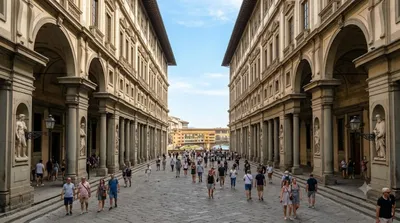
Museums & galleries
Uffizi Gallery
The Uffizi Gallery, located near Piazza della Signoria in Florence, is renowned for its collection of Italian Renaissance paintings. With works by Botticelli, Leonardo da Vinci, Michelangelo, and Raphael all under one roof, it's an ideal stop for travelers wanting to trace the development of Renaissance art firsthand.
Museums & galleries
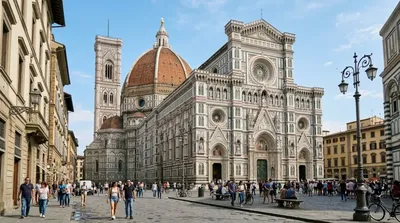
Florence Cathedral
Florence Cathedral, or Santa Maria del Fiore, is the city's archiepiscopal cathedral, begun in 1296 to a Gothic design by Arnolfo di Cambio and completed in 1436 with Filippo Brunelleschi's dome. The exterior is faced with white marble panels alternating with green and pink marble, and the facade is a 19th-century Gothic Revival design by Emilio De Fabris.

Museums & galleries
Palazzo Pitti
The Pitti Palace is a vast Renaissance palace south of the Arno River, not far from the Ponte Vecchio. It was built in 1458 as the residence of Florentine banker Luca Pitti and was greatly enlarged after passing into the hands of the Medici family.
Views & landmarks
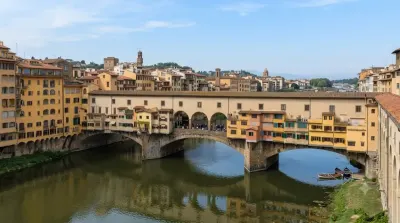
Ponte Vecchio
The Ponte Vecchio is a medieval stone bridge over the Arno River, distinctive for the shops lining both sides of its span. Butchers, tanners, and greengrocers once occupied the bridge, but today it houses jewelers selling gold and gems, art galleries, and souvenir shops. It was also the only bridge in Florence to survive the destruction of World War II.
More Florence guides
Best value
Where should I stay in Florence for the best value?
5-star & luxury
Which area of Florence is best for a 5-star or luxury hotel stay?
Family travel
Where to Stay in Florence with Kids: A Guide to Family-Friendly Neighborhoods
Couples & honeymoon
Where should couples stay in Florence for a honeymoon trip?
Central & near stations
Where to stay in Florence near Santa Maria Novella and the historic centre
Best time to visit
When Is the Best Time to Visit Florence?
First-time guide
How to plan your first trip to Florence, Italy
Getting around
How to get around Florence, Italy: walking, trams, and day-trip trains
Pool villas & resorts guides for other destinations
Guantánamo
Where to stay for pool villas and resort-style accommodation in Guantánamo
Cetinje
Where to Stay in Cetinje for Pool Villas and Mountain Resorts
North Nicosia
Where to Stay in North Nicosia for Pool Villas and Resort Living
Cienfuegos
Where to stay in Cienfuegos for pool villas and coastal resorts