
Fukuoka · Family travel
Where should families base themselves in Fukuoka: Hakata, Tenjin, or near the sights?
August 2, 2026 · last updated · about 5 min read
Choosing where to stay in Fukuoka with kids
Fukuoka is unusually compact for a major Japanese city, and the airport sits close enough to the center that families lose little travel time getting to a hotel. Most itineraries run along the Hakata–Tenjin stretch of the Kuko (Airport) subway line, so the first decision is simply which end of that stretch suits your routine better.
Hakata Station area
Best for families who want one hub for everything: the shinkansen, airport subway, luggage storage, and direct department-store and food-hall access without going outside. It suits trips with day excursions outside the city, or families who arrive tired and want an easy first and last night. It sits on the Kuko Line, with Tenjin and the airport both a short subway ride away.
Tenjin
More residential-adjacent and walkable, with parks, covered shopping arcades, and a slightly calmer evening feel than Hakata's station bustle. It works well for families planning to walk to Ohori Park, Fukuoka Castle ruins, or Canal City rather than relying on trains for every outing. Tenjin is one stop from Hakata on the Kuko Line and is also served by the Nanakuma Line.
Ohori Park / castle area
Quieter, greener, and centered on a lake park with playgrounds and open space — a good fit for families prioritizing downtime over sightseeing density. It's a subway stop or two past Tenjin on the Kuko Line, meaning slightly longer walks to restaurants and shops.
Momochi Seaside
Home to Fukuoka Tower and Marine World, this area suits families centering their trip on the aquarium or beach park. It's not on the subway line directly; expect a walk or bus connection from the nearest station, which matters more with strollers or tired kids.
What to check before booking
- Room configuration for the number of children, and whether triple/quad rooms or connecting rooms are available rather than assuming a standard double will fit everyone
- Elevator access and floor placement if traveling with a stroller or a crib request
- Proximity to a convenience store or supermarket for late-night formula, snacks, or medicine runs
- Distance from the nearest subway entrance versus distance from a bus stop, since bus routes can be harder to navigate with young kids
When to visit
School holiday periods in both Japan and Korea push demand up given Fukuoka's role as the closest Japanese city to Korea, and rooms with family configurations book out first. Booking earlier matters more for room type availability than for price.
Pick your dates — we'll search Fukuoka hotels for you
Choose dates and guests, and the buttons below will open search results with your criteria. Prices differ between sites, so compare before you book.
 View on Booking.com
 View on Hotels.com
Things to see in Fukuoka
See all →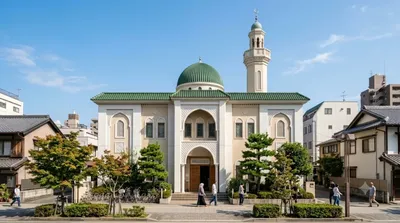
Temples & religious sites
Fukuoka Mosque
Fukuoka Mosque (formally the Fukuoka Masjid Al-Noor Islamic Cultural Center) is a mosque in Hakozaki, Higashi Ward, Fukuoka City. It opened in April 2009 and is known as the first mosque in the Kyushu region.
Nature
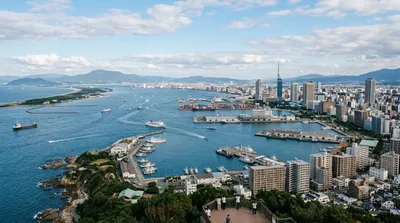
Hakata Bay
Hakata Bay lies northwest of Fukuoka City on Kyushu, facing the Tsushima Strait. With beaches and a port close to downtown, it offers easy access to the sea from the city center, and much of its shoreline has been reclaimed over the course of urban expansion, so port facilities and parks now sit side by side along the coast.
Museums & galleries
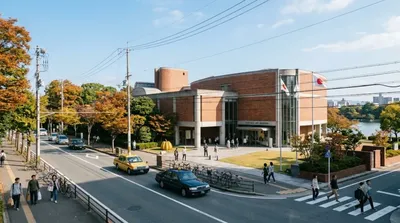
Fukuoka Art Museum
The Fukuoka Art Museum holds both Western and Asian art, with rotating special exhibitions alongside its permanent collection. It has previously hosted major shows such as one on Chagall, and these exhibitions spotlighting particular artists or themes are often the main reason to visit. The museum sits inside Ohori Park, making it easy to combine with a stroll through the park.
Temples & religious sites
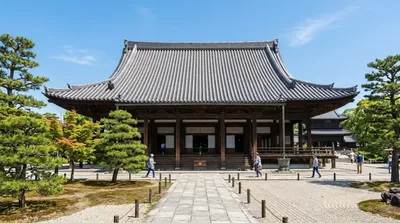
Shōfuku-ji Temple
Shōfuku-ji is a temple of the Myōshin-ji school of Rinzai Zen Buddhism located in Kosho-machi, Hakata, and is known as Japan's oldest Zen temple. It was founded by Eisai with the patronage of Minamoto no Yoritomo, founder of the Kamakura shogunate, and a plaque said to be written by Yoritomo himself hangs at the temple's mountain gate.
More Fukuoka guides
Best value
Where should you stay in Fukuoka for the best value?
5-star & luxury
Where should you stay in Fukuoka for a 5-star or luxury trip?
Pool villas & resorts
Where to Stay in Fukuoka for a Pool Villa or Resort-Style Getaway
Couples & honeymoon
Where to Stay in Fukuoka for Couples: Tenjin, Hakata, or Ohori Park?
Central & near stations
Where should you stay in Fukuoka if you want to be near the subway and stations?
Best time to visit
When is the best time to visit Fukuoka, Japan?
First-time guide
How Should First-Time Visitors Plan a Trip to Fukuoka, Japan?
Getting around
How to get around Fukuoka: subway, walking, and the airport link
Family travel guides for other destinations
Guantánamo
Where to stay in Guantánamo with children: Best areas and family accommodation guide
Cetinje
Where to stay in Cetinje for a family trip: Best areas and practical booking advice
North Nicosia
Where to stay in North Nicosia for a family trip
Banja Luka
Where to stay in Banja Luka for a family trip: best neighborhoods and practical tips