World by City

Heritage & monuments

Deir el-Bahari
Open in Maps
Deir el-Bahari

Deir el-Bahari

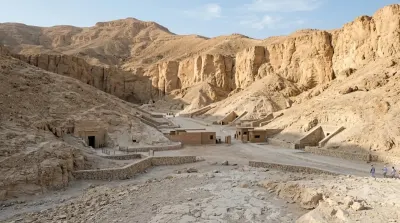
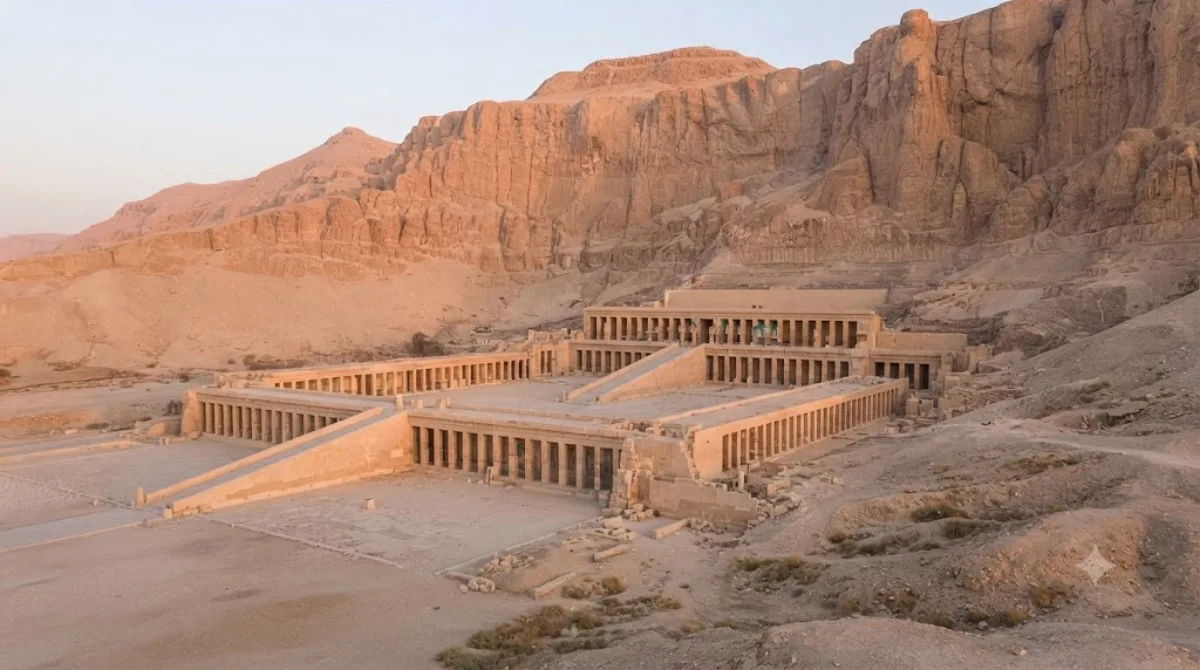
Located on the west bank of the Nile in Luxor, Deir el-Bahari is an archaeological site featuring two primary mortuary temples. The site contains the temple of Mentuhotep II and the larger, better-preserved temple of Queen Hatshepsut. Visitors go here to study the unique terraced architecture and the reliefs depicting the history and trade expeditions of the 18th Dynasty.

Getting There

To reach the site from Luxor city centre, you must cross the Nile to the West Bank. This is typically done via taxi, ride-share, or local ferry. The journey takes approximately 20 to 30 minutes depending on traffic and the crossing point used.

Time Allocation

Allow roughly 2 to 3 hours to explore the temple complexes and the surrounding cliffside area. This provides enough time to walk through the three levels of the main temple and view the remaining structures of the earlier dynasty.

Planning Your Visit

Early morning is the most practical time to visit to avoid the midday heat. The site gets crowded, particularly during the peak winter tourist season. Avoid visiting during the height of summer when temperatures in the valley are extreme.

Nearby Attractions

Because of its location, this site is often combined with other West Bank monuments. The following are within walking distance or a very short drive:

  • Valley of the Kings: 0.6km
  • KV46: 0.6km
  • KV26: 0.6km
  • KV27: 0.6km

Updated September 8, 2026 · Edited by the World by City editors

Tickets & tours

Admission prices and opening hours change often, so we don't list them here. Check what's on sale and at what price below — booking ahead can cut the queue at some places.

This place may not appear in the results — some sites are free to enter or sell tickets only at the gate.

Stays near Deir el-Bahari

Sorted by distance, walkable ones first. Distances are straight-line.

Map and place data © OpenStreetMap contributors

Deir el-Bahari Nearby stays

Check prices and availability on the booking sites.

Pick your dates — we'll search Luxor hotels for you

Choose dates and guests, and the buttons below will open search results with your criteria. Prices differ between sites, so compare before you book.

Hotel membership

Staying at Accor hotels often? ALL Accor+ Explorer

A paid annual membership. It includes two free nights a year across Asia-Pacific, 30% off dining and 15% off drinks, and 15% off stays at more than 4,500 hotels worldwide.

Explore the membership

Itineraries including this place

Good to visit alongside

Valley of the Kings

Nature

Valley of the Kings

The Valley of the Kings is a burial site near Luxor where pharaohs and nobles of ancient Egypt's New Kingdom were laid to rest. Exploring its many tombs lets visitors experience Egypt's history from thousands of years ago up close.

0.6 km away

KV46

Heritage & monuments

KV46

This tomb in the Valley of the Kings holds the remains of Yuya and Tjuyu, the parents of Queen Tiye, wife of Pharaoh Amenhotep III. Despite tomb robbers, many grave goods were found remarkably intact when it was excavated in 1905.

0.6 km away

KV26

Heritage & monuments

KV26

KV26 is an 18th Dynasty tomb in Egypt's Valley of the Kings, located in a side wadi that leads to the tomb of Thutmose III. It has been surveyed several times since the 19th century, with its first formal excavation taking place in 2009.

0.6 km away

KV60

Heritage & monuments

KV60

This ancient Egyptian tomb in the Valley of the Kings in Luxor was discovered by Howard Carter in 1903. One of the mummies found here is believed to be Pharaoh Hatshepsut, drawing considerable scholarly interest.

0.6 km away

KV30

Heritage & monuments

KV30

KV30 is an ancient Egyptian tomb in the Valley of the Kings, believed to date from the mid-18th Dynasty. It was first discovered by Giovanni Belzoni in 1817, and renewed excavations have been underway since 2009.

0.6 km away

KV27

Heritage & monuments

KV27

KV27 is a tomb in the Valley of the Kings at Luxor that wasn't thoroughly investigated until the 1990s. It consists of four chambers, and who was buried there remains unknown.

0.6 km away