
Okinawa · Couples & honeymoon
Where should couples stay in Okinawa for a honeymoon trip?
August 2, 2026 · last updated · about 4 min read
Where to base yourselves in Okinawa as a couple
Okinawa is an island trip, not a city trip: "where to stay" mainly means "which coast." The Yui Rail only covers Naha and the airport; everywhere else needs a rental car, so choose a base by drive time, not rail access.
Naha (near the Yui Rail line)
The only area reachable by rail — a car-free start or end to the trip, with dining and shopping on foot. It's a city base, not a resort one; beaches nearby are limited, so it suits a short stay more than the main honeymoon base.
Chatan / American Village (west coast, ~30 min)
A casual coastal town with sunset-facing beaches and walkable restaurants. Good middle ground for beach access without a long drive north.
Onna Village (west coast, ~45-75 min from the airport)
Home to most of Okinawa's beachfront resorts and the area most associated with honeymoon stays — calmer water, west-facing sunsets, slower pace than Naha. A car is needed for meals outside the property.
Nago / Yanbaru (north)
Quieter and more remote, closer to Churaumi Aquarium. Suits couples prioritizing seclusion, but expect longer night drives and fewer restaurants after dark.
What to check before booking
- Whether the property is adults-only or couple-oriented, if that matters
- Room orientation for sunset views — this varies by building, not area
- Whether dinner is included, since nearby restaurants can be scarce at night in Onna or Nago
- Private beach or terrace access versus shared public beach
- Rental car pickup point — airport or near the hotel
Timing and availability
Typhoon season runs roughly June-October; check cancellation terms if booking then. Golden Week (late April-early May) and Obon (mid-August) bring the highest demand and tightest resort availability. Spring and autumn tend to offer calmer weather and better availability than midsummer.
Pick your dates — we'll search Okinawa hotels for you
Choose dates and guests, and the buttons below will open search results with your criteria. Prices differ between sites, so compare before you book.
 View on Booking.com
 View on Hotels.com
Things to see in Okinawa
See all →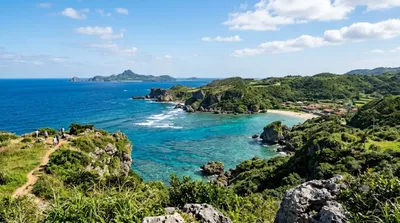
Nature
Ryukyu Islands
The Ryukyu Islands (Nansei Islands) are a chain of islands in southwestern Japan stretching from Kyushu toward Taiwan, spanning Kagoshima and Okinawa prefectures. The Okinawa portion is scattered with islands large and small centered on Okinawa Island; the larger ones tend to be volcanic and the smaller ones coral-based, giving each island a distinct coastline and sea color.
Nature
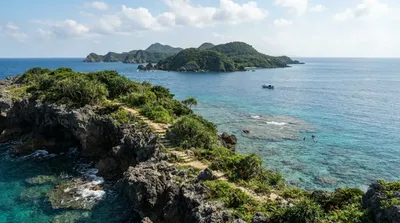
Okinawa Islands
The Okinawa Islands form the core of Okinawa Prefecture, a cluster of large and small islands at the heart of Japan's Nansei Islands. It's a destination where travelers can island-hop and enjoy each island's distinct charm.
Castles & palaces
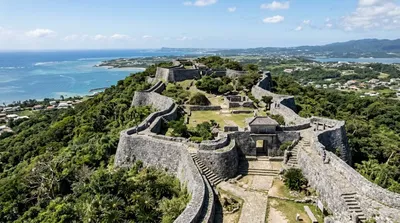
Nakagusuku Castle
Nakagusuku Castle is a gusuku (fortress) ruin built during the Ryukyu Kingdom era, considered one of the best-preserved gusuku sites still standing today. It's known for its curving stone walls and a castle layout divided into six enclosures, and in 2000 it was registered as part of the UNESCO World Heritage Site "Gusuku Sites and Related Properties of the Kingdom of Ryukyu."

Nature
Lake Man
Despite its name, Manko is not a lake but a tidal wetland straddling the border of Naha and Tomigusuku. Located within Manko Park, it covers a modest area of about 0.11 square kilometers. Mangrove forests and mudflats attract many visitors who come to observe waterbirds, crabs, and other tidal life, making it a notable wetland ecosystem within easy reach of central Okinawa.
More Okinawa guides
Best value
Which area of Okinawa offers the best value for money to stay in?
5-star & luxury
Where should you stay in Okinawa for a 5-star, luxury resort trip?
Pool villas & resorts
Where to Stay in Okinawa for a Pool Villa or Resort Trip
Family travel
Where should families stay in Okinawa, and how do you get around from there?
Central & near stations
Where to stay in central Naha, Okinawa, near the Yui Rail monorail
Best time to visit
When Is the Best Time to Visit Okinawa, Japan?
First-time guide
How does Okinawa's transport work for a first-time visitor?
Getting around
How do you get around Okinawa without a car?