
Okinawa · Best value
Which area of Okinawa offers the best value for money to stay in?
August 2, 2026 · last updated · about 4 min read
Where to stay in Okinawa for the best value
Okinawa is a long, thin island, so best value here means a base that cuts driving time and avoids resort rates every night. A rental car decides most trips, so weigh parking and pickup logistics as heavily as the room rate.
Naha, near a Yui Rail station
Naha is the only part of Okinawa with rail transit. Hotels a few stops from the tourist strip around Kokusai-dori tend to cost less while staying just as connected. Omoromachi or the stops near the airport put you on the monorail straight to OKA, so you can arrive without a car and rent one only when heading to the beaches or the north. Good for a first and last night, or day trips from one base.
Chatan and Mihama, central west coast
This stretch north of Naha around American Village mixes condo-style stays with beach access, usually at lower rates than resort hotels further north in Onna Village. There is no rail here, so a car is required, but the central spot shortens drives to both southern sights and the northern coast.
Itoman and the south
Near the airport and the Peace Memorial Park area, rates tend to run lower and the drive back for a flight is short. Suits an itinerary leaning toward southern sights and diving spots over resort beaches up north.
What to check before booking
- Whether parking is included or charged separately, since a rental car is standard here
- Whether a kitchenette or nearby supermarket is available, useful for cutting meal costs
- Distance to the nearest Yui Rail station if you plan any car-free days in Naha
- Cancellation flexibility, given Okinawa exposure to typhoons
When to visit
Rates tighten around Golden Week, Obon in mid-August, New Year, and peak summer months. Shoulder periods like November or late winter outside New Year generally offer better value and more choice, though water is cooler.
Pick your dates — we'll search Okinawa hotels for you
Choose dates and guests, and the buttons below will open search results with your criteria. Prices differ between sites, so compare before you book.
 View on Booking.com
 View on Hotels.com
Things to see in Okinawa
See all →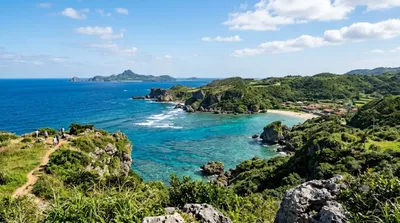
Nature
Ryukyu Islands
The Ryukyu Islands (Nansei Islands) are a chain of islands in southwestern Japan stretching from Kyushu toward Taiwan, spanning Kagoshima and Okinawa prefectures. The Okinawa portion is scattered with islands large and small centered on Okinawa Island; the larger ones tend to be volcanic and the smaller ones coral-based, giving each island a distinct coastline and sea color.
Nature
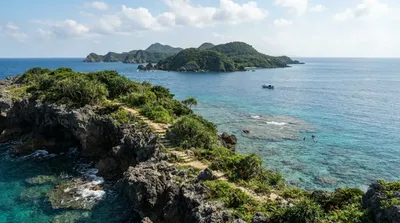
Okinawa Islands
The Okinawa Islands form the core of Okinawa Prefecture, a cluster of large and small islands at the heart of Japan's Nansei Islands. It's a destination where travelers can island-hop and enjoy each island's distinct charm.
Castles & palaces
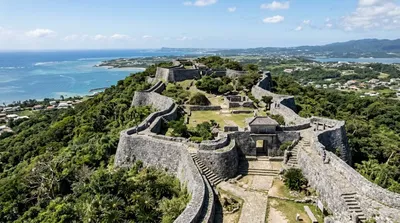
Nakagusuku Castle
Nakagusuku Castle is a gusuku (fortress) ruin built during the Ryukyu Kingdom era, considered one of the best-preserved gusuku sites still standing today. It's known for its curving stone walls and a castle layout divided into six enclosures, and in 2000 it was registered as part of the UNESCO World Heritage Site "Gusuku Sites and Related Properties of the Kingdom of Ryukyu."

Nature
Lake Man
Despite its name, Manko is not a lake but a tidal wetland straddling the border of Naha and Tomigusuku. Located within Manko Park, it covers a modest area of about 0.11 square kilometers. Mangrove forests and mudflats attract many visitors who come to observe waterbirds, crabs, and other tidal life, making it a notable wetland ecosystem within easy reach of central Okinawa.
More Okinawa guides
5-star & luxury
Where should you stay in Okinawa for a 5-star, luxury resort trip?
Pool villas & resorts
Where to Stay in Okinawa for a Pool Villa or Resort Trip
Family travel
Where should families stay in Okinawa, and how do you get around from there?
Couples & honeymoon
Where should couples stay in Okinawa for a honeymoon trip?
Central & near stations
Where to stay in central Naha, Okinawa, near the Yui Rail monorail
Best time to visit
When Is the Best Time to Visit Okinawa, Japan?
First-time guide
How does Okinawa's transport work for a first-time visitor?
Getting around
How do you get around Okinawa without a car?