World by City

Temples & religious sites

Sensō-ji Temple
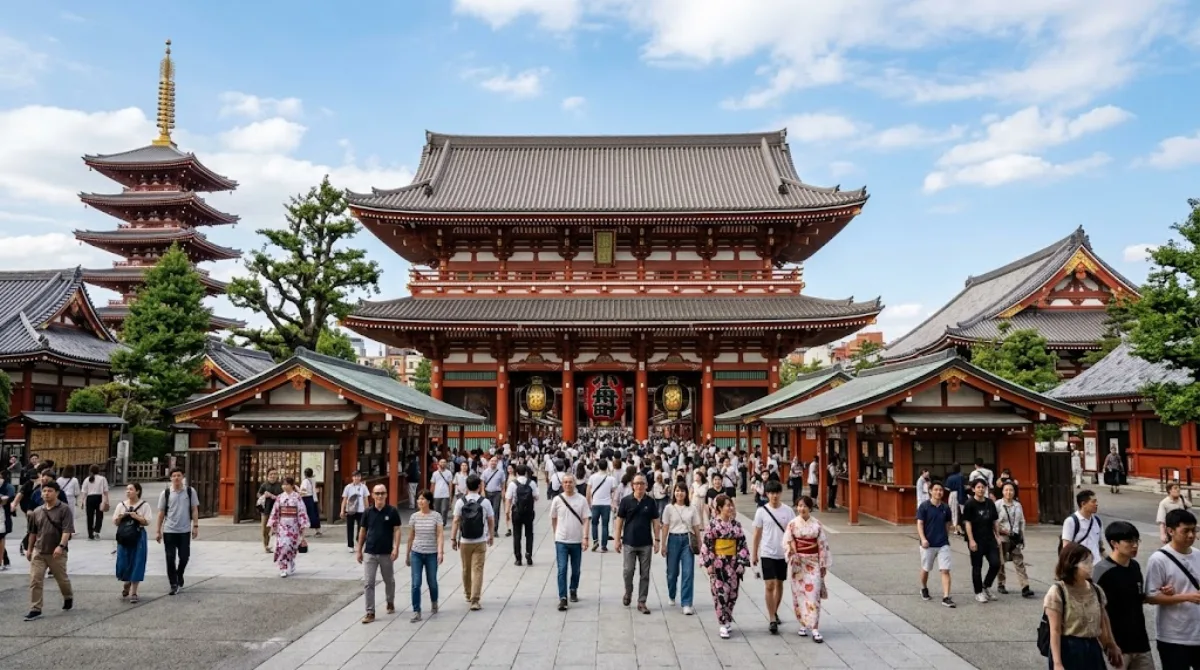
Sensō-ji Temple

Sensō-ji , is an ancient Buddhist temple in Asakusa, Tokyo, Japan. It is Tokyo's oldest-established temple, and one of its most significant. It is dedicated to Kannon, the bodhisattva of compassion. Structures in the temple complex include the main hall, a five-story pagoda and large gates. It is the most widely visited religious site in the world with over 30 million visitors annually. The temple is the 13th stop on the Bandō Sanjūsankasho pilgrimage route.

What it is

Sensō-ji is Tokyo's oldest temple, founded in the 7th century and dedicated to Kannon, the Buddhist deity of compassion. Most visitors come for the walk up Nakamise-dōri, a covered shopping street lined with stalls selling snacks and souvenirs, leading to the towering Kaminarimon gate, the main hall, and a five-story pagoda. It's a working religious site as well as a sightseeing stop, so expect incense smoke, people praying, and a steady flow of both worshippers and tourists.

Getting there

From central Tokyo (Shinjuku, Shibuya, or Tokyo Station), the trip to Asakusa Station takes roughly 20-30 minutes by subway or train, with a short walk of a few minutes to the temple grounds. Asakusa is served by the Tokyo Metro Ginza Line, the Toei Asakusa Line, and the Tobu Skytree Line.

How much time to allow

Budget around 1-2 hours to walk Nakamise-dōri, see the main hall and pagoda, and explore the surrounding lanes. Add more time if you want to sit in the temple grounds, visit smaller shrines nearby, or browse the shops at a slower pace.

When to go

This is one of the most visited religious sites anywhere, and it shows: Nakamise-dōri and the main hall area get very crowded, especially midday and on weekends. Arriving early in the morning gives a noticeably quieter experience and better photos of the gates without crowds.

What to combine it with

  • Tokyo National Museum (1.9km) — Japan's largest collection of art and antiquities.
  • National Museum of Western Art (1.9km) — a compact collection with a strong European painting and sculpture holding.
  • National Museum of Nature and Science (1.8km) — a good option if traveling with kids or interested in natural history.

These three sit close together in Ueno Park, so it's practical to pair a morning at Sensō-ji with an afternoon museum visit in the same trip.

Sources: open data from Wikipedia and OpenStreetMap · Updated August 5, 2026 · Edited by the World by City editors

Tickets & tours

Admission prices and opening hours change often, so we don't list them here. Check what's on sale and at what price below — booking ahead can cut the queue at some places.

This place may not appear in the results — some sites are free to enter or sell tickets only at the gate.

Stays near Sensō-ji Temple

Sorted by distance, walkable ones first. Distances are straight-line.

Map © OpenStreetMap contributors. Lines are straight connections, not actual routes.

Sensō-ji Temple Nearby stays

Locations and names come from OpenStreetMap. Check prices and availability on the booking sites.

Good to visit alongside

National Museum of Nature and Science

Museums & galleries

National Museum of Nature and Science

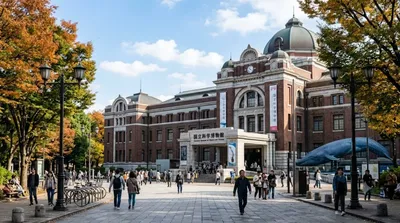
The National Museum of Nature and Science is in the northeast corner of Ueno Park in Tokyo. The museum has exhibitions on pre-Meiji science in Japan. It is the venue of the taxidermied bodies of the legendary dogs Hachikō and Taro and Jiro. A life-size blue whale model and a steam locomotive are also on display outside.

1.8 km away

National Museum of Western Art

Museums & galleries

National Museum of Western Art

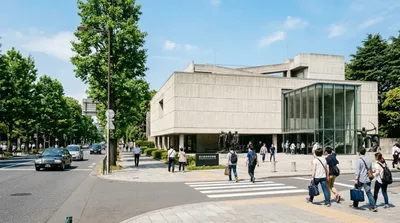
The National Museum of Western Art is the premier public art gallery in Japan specializing in art from the Western tradition. The museum is in the Ueno Park in Taitō, central Tokyo. It received 1,162,345 visitors in 2016.

1.9 km away

Tokyo National Museum

Museums & galleries

Tokyo National Museum

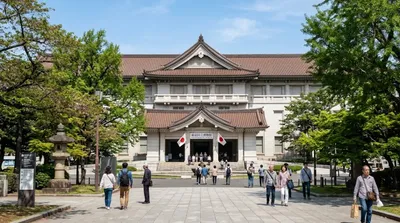
The Tokyo National Museum or TNM is an art museum in Ueno Park in the Taitō ward of Tokyo, Japan. It is considered the oldest national museum and the largest art museum in Japan. The museum collects, preserves, and displays a comprehensive collection of artwork and cultural objects from Asia, with a focus on ancient and medieval Japanese art and Asian art along the Silk Road. There is also a large collection of Greco-Buddhist art. As of April 2023, the museum held approximately 120,000 Cultural Properties, including 89 National Treasures, 319 Horyuji Treasures, and 649 Important Cultural Prop...

1.9 km away

Tokyo Metropolitan Art Museum

Museums & galleries

Tokyo Metropolitan Art Museum

The Tokyo Metropolitan Art Museum is a museum of art located in Ueno Park, Tokyo, Japan. The first public art museum in Japan, it opened in 1926 as the Tokyo Prefectural Art Museum and was renamed in 1943 after Tokyo became a metropolitan prefecture. The original building was replaced by one built in 1975 designed by modernist architect Kunio Maekawa.

2.2 km away

Ueno Zoo

Zoos & aquariums

Ueno Zoo

The Ueno Zoo is a 14.3-hectare (35-acre) zoo, managed by the Tokyo Metropolitan Government, and located in Taitō, Tokyo, Japan. It is Japan's oldest zoo, opened on March 20, 1882. It is served by Ueno Station, Keisei Ueno Station and Nezu Station, with convenient access from several public transportation networks. The Ueno Zoo Monorail, the first monorail in the country, connected the eastern and western parts of the grounds, however the line was suspended from 2019 onwards due to ageing infrastructure until being announced as closing permanently on 27 December 2023.

2.3 km away

Ueno Imperial Grant Park

Parks & gardens

Ueno Imperial Grant Park

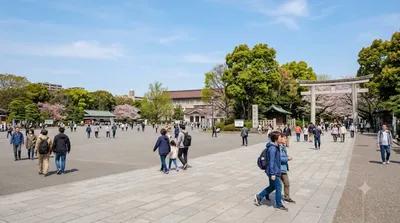
Ueno Park is a spacious public park in the Ueno district of Taitō, Tokyo, Japan. The park was established in 1873 on lands formerly belonging to the temple of Kan'ei-ji. Amongst the country's first public parks, it was founded following the Western example as part of the borrowing and assimilation of international practices that characterizes the early Meiji period. The home of a number of major museums, Ueno Park is also celebrated in spring for its cherry blossoms and hanami. In recent times the park and its attractions have drawn over ten million visitors a year, making it Japan's most pop...

2.3 km away