遺跡・記念物
耳塚
Mimizuka
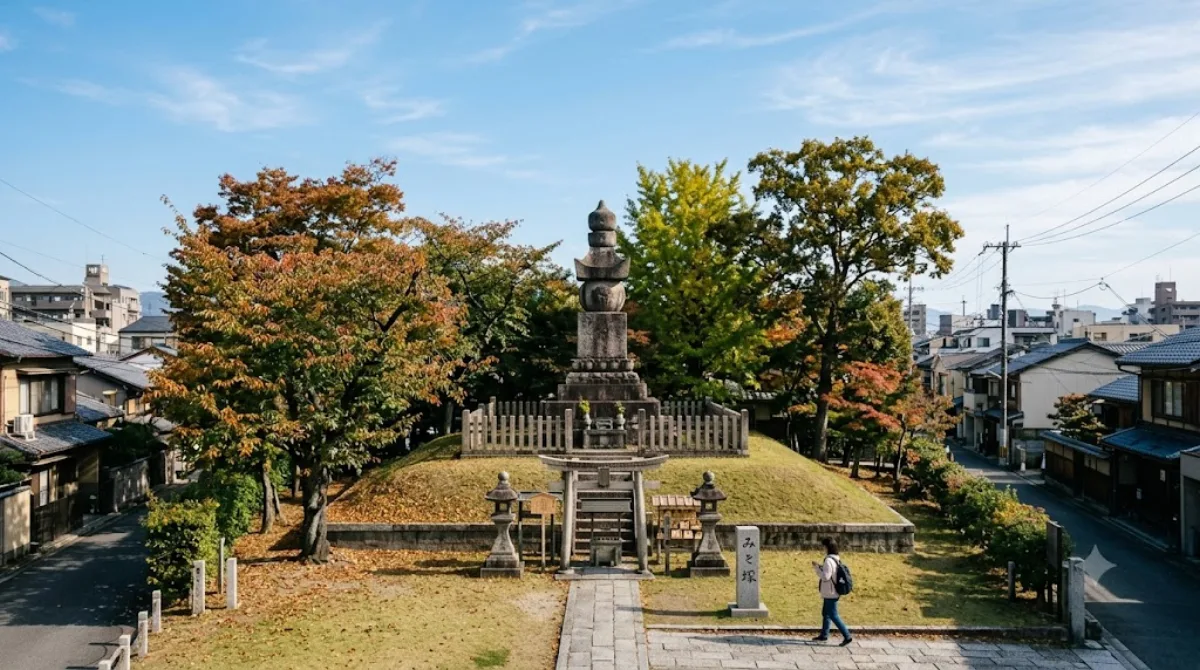
耳塚 もしくは鼻塚 とは戦死者の耳や鼻を弔ったとされる塚である。文禄・慶長の役における朝鮮および明兵の戦死者の鼻を弔ったものが有名。これ以外にも日本全国に耳塚と呼ばれるものは多数存在するが、実際に耳や鼻が葬られているものは確認されていない。
What it is
Mimizuka is a small earthen burial mound near the Kyoto National Museum, containing the noses of tens of thousands of Korean and Chinese soldiers and civilians killed during Toyotomi Hideyoshi's invasions of Korea in the 1590s. Noses were taken back to Japan in place of heads as battlefield proof of the death toll, then buried here and consecrated as a memorial. It is a somber, low-key site rather than a scenic one, and mainly draws travellers interested in this period of Japanese and Korean history.
Getting there
The mound sits in a residential pocket just west of the Kyoto National Museum grounds, a short walk from central Kyoto. From Kyoto Station, it's roughly a 15-20 minute bus or taxi ride, or about a 25-30 minute walk. It's also an easy add-on if you're already walking between the museum and Sanjūsangen-dō.
How much time to allow
There isn't much to see beyond the mound itself and its stone marker and information panels, so 10-15 minutes is generally enough.
When to go
Because it's a small, quiet neighborhood site rather than a major tourist stop, it rarely gets crowded and there's no particular time of day or season that matters much for visiting. Some travellers prefer visiting in daylight simply to read the on-site information panels comfortably.
What to combine it with
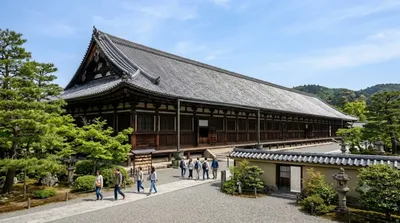
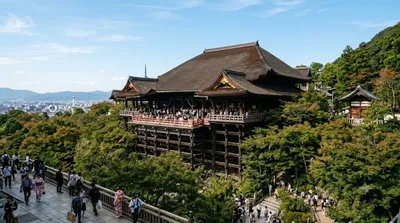
Its location makes it easy to fold into a museum-focused day: the Kyoto National Museum is just 0.3km away and Sanjūsangen-dō Temple is 0.4km away, both walkable in a few minutes. Kyoto Tower (1.1km) and Kiyomizu-dera Temple (1.4km) are further but still reachable on foot if you're extending the walk.
出典:ウィキペディア・OpenStreetMap の公開データ · 2026年8月5日 更新 · 編集 World by City 編集部