
Da Nang · Best time to visit
When is the best time to visit Da Nang, Vietnam?
August 13, 2026 · last updated · about 4 min read
Da Nang's seasons at a glance
Da Nang sits on Vietnam's central coast, so it follows a dry-season/wet-season pattern rather than four distinct seasons. Roughly February through August is dry; September through January brings the region's rain and storm risk.
February to May: the most balanced window
Days are warm, humidity is manageable, and rain is infrequent. Sea water is warming up but still comfortable for swimming. This period suits combining Da Nang's beaches with day trips to Hoi An's Old Town and the Ba Na Hills cable car, since clear skies matter for both. Tet (Vietnamese Lunar New Year, usually late January or February) falls inside this window — expect higher prices, packed domestic flights, and some family-run restaurants and shops closed for several days.
June to August: hot, humid, and busy
Temperatures and humidity peak, and this coincides with Vietnamese school summer holidays, so beaches, My Khe in particular, get crowded with domestic tourists and prices for flights and rooms rise. Good for beach-focused trips if you don't mind heat and crowds; less ideal for long walking days in Hoi An.
September to November: storm season, best avoided
This is typhoon and tropical depression season for central Vietnam. Heavy rain, flooding, and occasional storm-related flight or ferry disruptions are possible, including for the nearby Cham Islands. It's the cheapest and quietest period, but plans need built-in flexibility.
December to January: cooler and quieter
Skies are often grey with intermittent rain and cooler temperatures, not ideal for swimming but fine for sightseeing, food, and the Ba Na Hills. Crowds and prices drop outside the Tet run-up.
Getting around whatever the season
Da Nang has no metro system. Grab (app-based car and motorbike-taxi booking) is the most predictable option for pricing and English-language use; metered taxis and motorbike taxis are also widely available, especially useful during rain when waiting outdoors is unpleasant.
What to pack
Feb–May or Jun–Aug: lightweight breathable clothing, strong sun protection, a reusable water bottle. Sep–Jan: a compact rain jacket or umbrella, quick-dry layers, and a buffer day or two in your itinerary in case of weather delays.
Pick your dates — we'll search Da Nang hotels for you
Choose dates and guests, and the buttons below will open search results with your criteria. Prices differ between sites, so compare before you book.
 View on Booking.com
 View on Hotels.com
Things to see in Da Nang
See all →
Views & landmarks
Golden Bridge
The Golden Bridge is a 150-meter pedestrian bridge inside the Ba Na Hills resort near Da Nang. Built as a walkway connecting the cable car station to the garden area, it also serves as a viewpoint overlooking the surrounding ridges from the mountainside.
Views & landmarks
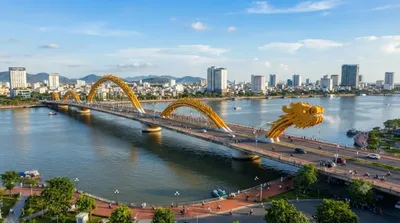
Dragon River Bridge
This iron bridge across the river is shaped like a dragon, its entire body forming the creature. It's best enjoyed from the riverbank alongside the night view rather than crossed on foot or by car — it lights up after dark, and on weekend evenings the dragon's head sometimes breathes fire or spouts water.
Temples & religious sites
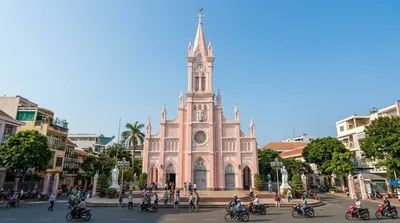
Roman Catholic Diocese of Đà Nẵng
The Diocese of Da Nang is a Roman Catholic diocese covering central Vietnam, established in its current form on January 18, 1963, and is a suffragan of the Archdiocese of Hue. Travelers typically visit not the diocesan offices themselves but the diocese's cathedral, Da Nang Cathedral (the Pink Church), known for its French colonial-era architecture and pink facade.
Temples & religious sites
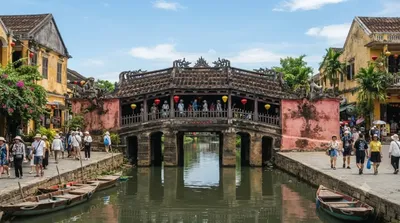
Japanese Bridge
The Japanese Bridge is a covered wooden bridge over a small stream in Hoi An's old town, with a small temple built into its center. It is believed to have been built by Japanese merchants living in the area in the late 16th century, and has since been repaired and restored several times to reach its present form.
More Da Nang guides
Best value
Where to stay in Da Nang for the best value: beach strip, An Thuong lanes, or the river-side city center
5-star & luxury
Where to Stay in Da Nang for a 5-Star or Luxury Trip
Pool villas & resorts
Where should you stay in Da Nang for a pool villa or resort?
Family travel
Where should families stay in Da Nang: beach strip, city center, or Son Tra?
Couples & honeymoon
Where should couples stay in Da Nang: beach, riverside, or near Hoi An?
Central & near stations
Where to Stay in Da Nang for Central Access and Easy Transport
First-time guide
How to plan your first trip to Da Nang, Vietnam
Getting around
How do you get around Da Nang without a metro?
Best time to visit guides for other destinations
Guantánamo
When is the best time to visit Guantánamo, Cuba?
Cetinje
The Best Time to Visit Cetinje: Weather, Crowds, and Season Guide
North Nicosia
When to Visit North Nicosia: Weather, Seasons, and Practical Advice
Banja Luka
The Best Time to Visit Banja Luka for Good Weather and Outdoor Activities