
Naples · 5-star & luxury
Where to stay in Naples for a 5-star or luxury hotel: waterfront, Chiaia, or Vomero, and how each connects to transport and sights.
August 2, 2026 · last updated · about 4 min read
Where to stay in Naples for a 5-star or luxury stay
Naples' luxury hotels cluster along the waterfront and on the hillside above the old center, close to the sights but removed from the busiest streets.
Via Partenope and Santa Lucia
Facing Castel dell'Ovo and the bay, this stretch holds Naples' grand historic hotels, many with sea-facing rooms. Short walk to Piazza del Plebiscito, the Royal Palace, Teatro San Carlo, and Molo Beverello for ferries to Capri and Amalfi. Seafront traffic can be loud; ask for a room off the road side.
Chiaia
The upscale shopping district behind Via Partenope, centered on Piazza dei Martiri and Villa Comunale. Quieter at night, with narrow streets suited to smaller luxury and boutique properties, close to the center but off the main tourist route.
Vomero
The hill above the city, reached by funicular, is residential and calmer, known for views over the bay. Suits travelers who value quiet over proximity to sights.
Transport and sights
Metro Line 1 (several stations built as art installations, worth riding on their own) and Line 2 cross the center; Piazza Amedeo and Montesanto link to the funiculars up to Vomero. From Capodichino airport (NAP) there's no direct metro, so a bus or taxi is standard. Waterfront and Chiaia hotels sit near the metro and ferry terminal; Vomero adds a funicular leg each trip.
What to check before booking
Confirm a "sea view" room faces the bay, not a side street, and ask about air conditioning for summer. Historic buildings often have restricted or valet-only parking. Given Naples' reputation for pickpocketing in crowds, ask what in-room security is offered.
When to visit
Demand peaks late spring through summer, from travelers combining Naples with Capri, Sorrento, and Amalfi, and again around Easter. Sea-view rooms sell out furthest ahead, so book months ahead if a specific view or room matters.
Pick your dates — we'll search Naples hotels for you
Choose dates and guests, and the buttons below will open search results with your criteria. Prices differ between sites, so compare before you book.
 View on Booking.com
 View on Hotels.com
Things to see in Naples
See all →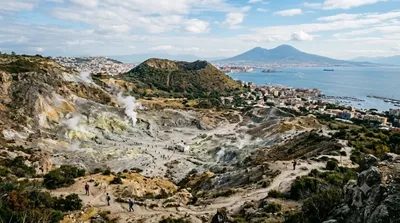
Nature
Phlegraean Fields
The Phlegraean Fields are a vast volcanic caldera west of Naples, so close to the city that part of Naples itself sits atop it. The terrain, shaped by volcanic activity, is dotted with fumaroles and other signs of geothermal activity, and the area is often described in the media as a "supervolcano."

Culture & venues
Teatro di San Carlo
The Teatro di San Carlo, next to the Royal Palace of Naples, is an opera house that opened in 1737 and is known as the world's oldest continuously operating opera house. Having been built before Milan's La Scala and Venice's La Fenice, it offers a firsthand look at the history of Italian opera.

Museums & galleries
Naples National Archaeological Museum
The National Archaeological Museum of Naples is one of Italy's leading archaeological museums, holding artifacts from the Greek, Roman, and Renaissance periods. Its core collection centers on Roman-era finds excavated from nearby Pompeii, Stabiae, and Herculaneum, and it's especially known for its mosaics and sculptures. From 1816 to 1861, it was known as the "Royal Bourbon Museum."

Museums & galleries
Museo di Capodimonte
The Capodimonte Museum is a national art museum housed in the Royal Palace of Capodimonte, built by the Bourbon dynasty in the 18th century. It grew out of the Farnese family's collection and the royal holdings of the Kingdom of Naples, and is considered to hold the richest collection of Neapolitan school paintings and decorative arts.
More Naples guides
Best value
Where should I stay in Naples for the best value?
Pool villas & resorts
Where should you stay near Naples for a pool villa or resort?
Family travel
Where should families stay in Naples?
Couples & honeymoon
Where should couples stay in Naples for a honeymoon trip?
Central & near stations
Where to Stay in Naples Near the Metro and Train Stations
Best time to visit
When Is the Best Time to Visit Naples, Italy?
First-time guide
How should a first-time visitor plan a trip to Naples, Italy?
Getting around
How do you get around Naples and reach Pompeii or the Amalfi Coast?